
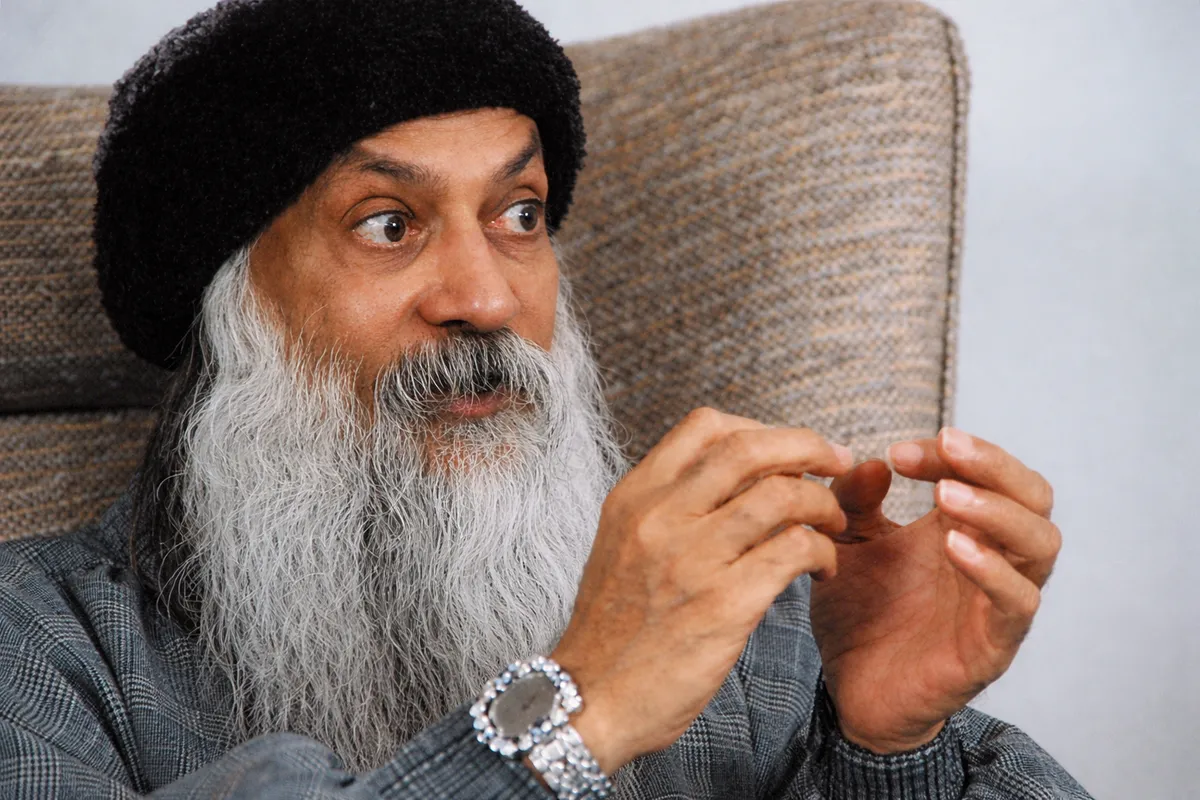
Prabhu Mandir Ke Dwar Par unfolds as an intricate exploration of existential queries and profound spiritual insights, guided by Osho’s unique philosophical lens. Through this series, Osho invites seekers to embark on an internal pilgrimage, urging them to question their preconceived notions and unveiling the thresholds to deeper consciousness. He emphasizes the importance of unburdening the mind from unanswered and lingering questions—an essential step towards spiritual clarity and transformation. Osho’s discourse intricately weaves through the realms of existentialism, self-discovery, and enlightenment. He presents spirituality not as a dogma to be followed but as a personal journey that requires active engagement and introspection. The series serves as a profound reminder of the personal and often solitary path to awakening, highlighting the temple of the divine that resides within each seeker. In essence, Prabhu Mandir Ke Dwar Par stands as a testament to Osho’s transformative teachings, encouraging individuals to dismantle mental barriers and embrace a state of awareness that transcends ordinary perception. Through his words, Osho opens the door to an experiential understanding of the self and the universe, inviting his audience to step beyond mere intellectual comprehension and into direct spiritual experience.
-
Chapter 1
God’s temple is existence and the human heart, not man‑made shrines; only fearless personal inquiry, not belief, priests or rituals, opens the Lord’s door.
-
Chapter 2
God is existence itself — the totality of life to be discovered, not believed in; drop idols, bias and partisanship, and seek with fearless, impartial inquiry.
-
Chapter 3
Belief is a blind mirage; doubt and rigorous thought uproot it; pass through reason and contemplation to no-thought, then samadhi beyond the door.
-
Chapter 4
Reject gurus, labels and influence; preserve individual inquiry and seek the soul and the Lord's temple to end the persistent 'why' and transcend ego.
-
Chapter 5
Total doubt and no-thought free you; thought merely rearranges memory—meditation (dhyana) is impartial witnessing that reveals the unknown beyond thought.
-
Chapter 6
Reject 'Harijan' and varna labels; be simply human rather than preserve categories. Drop thoughts by witnessing instead of fighting them for inner freedom.
-
Chapter 7
Witnessing is attentive living; meditation refines the ego but must be transcended—who will be the witness when even the 'I' dissolves into Being?
-
Chapter 8
True religion is inner knowing, not rituals; compassion and genuine service arise only when the ego dissolves—find yourself and God is found within.