
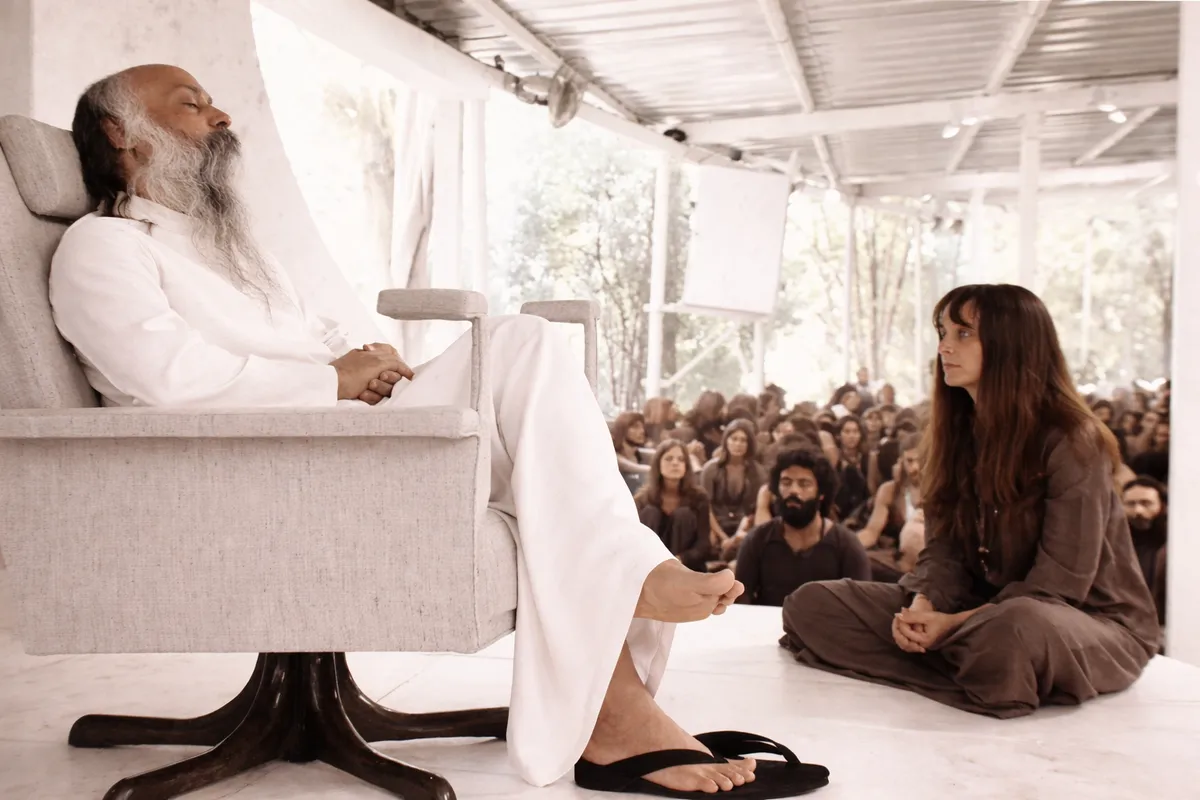
Om Shantih Shantih Shantih is a profound exploration of the essential quest for peace, delving into both its serene and tumultuous dimensions. Osho, with his characteristic insight and eloquence, unravels the multifaceted nature of peace, not merely as the absence of conflict but as a vibrant, living presence at the core of existence. This discourse series weaves through the spiritual tapestry of inner tranquility and examines how external chaos often mirrors internal unrest. Osho poignantly addresses the paradox of seeking peace in a world characterized by constant change and challenges the listener to embrace the present moment as the only truth. Through this journey, he offers a transformative perspective on acceptance, surrender, and the delicate balance of engaging with life while maintaining a serene center. Emphasizing meditative awareness, Osho encourages an intimate discovery of silence and stillness, fostering a deep understanding that peace is not a distant destination, but a continuous process of inner alignment. His teachings resonate with timeless wisdom, inviting seekers to transcend the surface noise of everyday life and connect to the profound peace within their own being, resonating with the universal vibration of "Shantih"—the ultimate peace.
-
Chapter 1: Sound is our mind -- silence is our being
Om is the universal heartbeat; tuning to Om leads to silence—sound is mind, silence our being. Eastern sutra begins and ends with Om Shantih Shantih Shantih
-
Chapter 2: An open future with no reverse gear
Life moves only forward; enlightenment is a beginning to be transcended, not a finish, and true meditation must be authentic alone, not borrowed as group energy.
-
Chapter 3: Love is showering on your boyfriend too!
Love should be transformed, not renounced: a master's love nourishes even your boyfriend, deepening love into pure, boundless lovingness and rejoicing.
-
Chapter 4: Life itself prepares the ground
Stop forcing light into the unconscious; relax, let-go and wait with silent receptivity — life prepares the ground and illumination arrives on its own.
-
Chapter 5: Love gives your legs a dance
Emptiness and fullness are complementary: meditation reveals their oneness, transcending mind's contradictions and opening the heart to compassion and being.
-
Chapter 6: First find yourself
True freedom comes from taking responsibility and finding yourself, not surrendering to gurus or psychic healers; reject belief, heal thyself.
-
Chapter 7: Nothing unnatural, but something unique
Share your being without converting others: love and learn from simple peoples, offer presence and art not doctrine; be open inwardly so the master can enter.
-
Chapter 8: Forward to supernature
Genetic engineering is natural progress, not against nature; embrace forward-to-supernature with global science, meditation-trained scientists and safeguards.
-
Chapter 9: Old stones that you used to think were diamonds
Passion becomes compassion only when love is genuine, not lust; drop the past, live fully in the present — Buddha’s return shows forgiveness as transformed love.
-
Chapter 10: Only reflecting, but not identifying
Be aware in moments of joy so depression cannot seize you; become a mirror that reflects without identifying, watching mood-swings and others' projections.
-
Chapter 11: Just don't be a polack!
Move inward out of love, joy and play—not fear. Shed anxious attachments, meet the unknown with courage and humor, and don't wait helplessly like the 'Polack'.
-
Chapter 12: Camels don't like to go to the mountains
Power favors the corrupted because society teaches ambition and competitiveness; authentic inner power is shunned. Osho urges radical education and revolution.
-
Chapter 13: Be, known thyself, keep the measure
Be, know thyself, keep the measure: balance inner meditation and outer action; reject priestly God as power, cultivate self-awareness and courage.
-
Chapter 14: Trust life, love life
Trust and loving surrender make the master both door and mystery: dissolve ego, touch the feet or remember him, and existence opens within you.
-
Chapter 15: The three rings of love
Don't surrender to a person but to love: preserve freedom, rejoice in the other's being; marriage as contract breeds jealousy and inevitable suffering.
-
Chapter 16: Having a lovely time -- but why?
Disidentify from heart and mind; witness their quarrel and remain silent — questions evaporate and guidance comes from awareness, not following impulses.
-
Chapter 17: Almost drunk with emotion
A nameless overwhelming feeling - love, fear, anger - blinds you; transform love from a transient emotion into an expression of your being through awareness.
-
Chapter 18: The mind goes out of employment
Mind creates endless complications; simplicity is your natural state in heart and being — stop solving, just be, and the mind goes out of employment.
-
Chapter 19: You cannot avoid what you are
You cannot avoid what you are: acknowledge guilt, confess to transform hollow emptiness into liberating nothingness; awareness stops reactive falling in love.
-
Chapter 20: Without icecream no love is complete
A woman asks why she’s never been fully loved; Osho explains biology vs poetic love, urges creating the loving atmosphere, playfulness, and patience.
-
Chapter 21: Little Ernie is your brother
Answers address the whole commune—Osho answers the person, revealing cowardice; 'Little Ernie' is a universal brother and the master claims no personal life.
-
Chapter 22: The seeker was the search
You are already the goal; inner awakening replaces seeking. The 'right man' is self-realized and beyond laws—become that right man, immediately.
-
Chapter 23: When you meet me just say good-bye
Meet your master, then say good-bye: Buddha's 'kill me' means drop both master and disciple, relinquish clinging and melt into nondual presence.
-
Chapter 24: A great waiting... a great longing for the unknown
Love as wine dissolves the ego: intoxication with existence frees us from priestly chains and rituals, bringing silence, joy and a fearless welcome of death.
-
Chapter 25: Greed knows no limit
Humanity must move beyond tribe and family to honor the sacred individual; dissolve old collectivisms — greed, conditioning and workaholism kill inner freedom.
-
Chapter 26: Existence does not believe in speed
Existence grows slowly; sannyas unfolds without hurry—initiation is a yes, not instant success. Patience and awareness in sleepiness bring awakening.
-
Chapter 27: Time for silence and time for laughter
Build a World Academy of Meditation, Art and Creative Science: love and honor the body as the door to consciousness, live herenow instead of postponing bliss.