
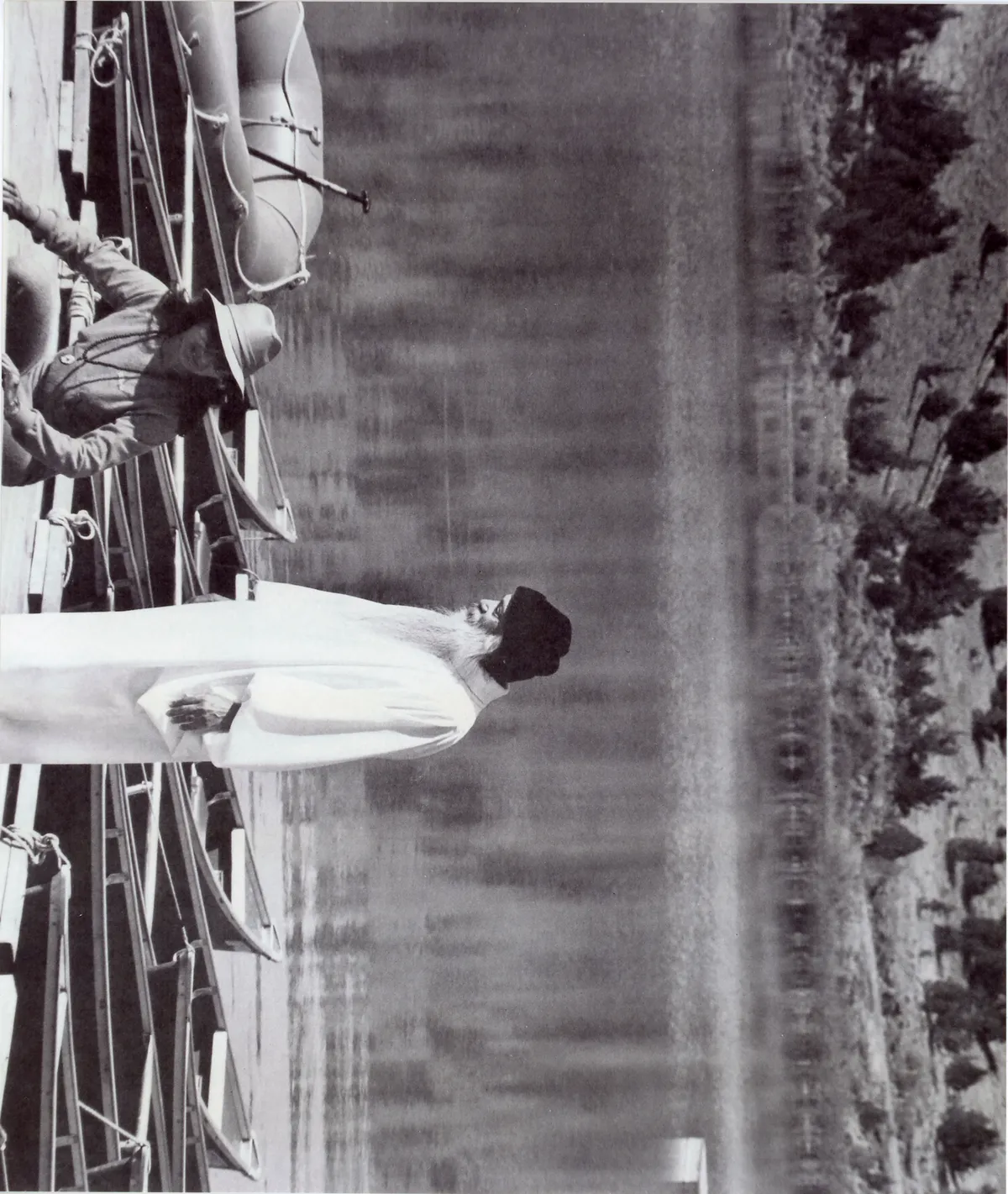
"Om Mani Padme Hum," a profound discourse series by Osho, delves into the depths of one of the most revered mantras in Buddhism. Throughout this series, Osho explores the intricate meanings and spiritual significance encapsulated within these sacred words. He deciphers the layers of wisdom, from the representation of the mantra as a spiritual path to its function as a bridge between the finite and infinite. Osho's exploration reveals that "Om Mani Padme Hum" is more than just a chant; it is a symbol of transcendental knowledge and spiritual awakening. Emphasizing the mantra’s core elements—compassion, transformation, and enlightenment—Osho invites us into a journey of introspection and self-discovery. He highlights the universal appeal of the mantra in guiding individuals towards a deeper understanding of the self and the divine. Osho’s insights serve as a catalyst for readers to awaken the latent potential within, encouraging an attunement with existential truths. With his unique approach, Osho encourages an embrace of life's mysteries, making "Om Mani Padme Hum" not only a series of spiritual teachings but also a call to live authentically, harmoniously, and with profound awareness of the interconnectedness of all existence.
-
Chapter 1: The music of OM
Om mani padme hum: OM is the inner music—the sound of silence to be heard, not chanted; let mantras sink into being, tears can be celebration, Tibet’s loss mourned.
-
Chapter 2: A very simple and humble affair
Bliss precedes gratitude: authentic prayer is spontaneous thankfulness born from inner ecstasy and self‑realization, not appeals to a hypothetical external God.
-
Chapter 3: This place is for innocence
Childlikeness is true meditation: innocence heals where knowledge imprisons, opening the heart to wonder and transformation rather than accumulation of facts.
-
Chapter 4: Never meditate over something
Never meditate over anything; dhyan is not a practice but no-mind — the disappearance of 'I' and object into pure being beyond words, methods, duality, and bliss.
-
Chapter 5: Just to relax on the river
Truth is simple; stop the ego's hunger for distant conquest—rest like Diogenes by the river. Being is becoming; insight dissolves becoming into present presence.
-
Chapter 6: Don't just accept: rejoice!
What is total acceptance? Reject imposed 'total' surrender as repression; rejoice in your unique spontaneity and clarity—acceptance arises naturally.
-
Chapter 7: Time to be completely disillusioned
Is a good sadhana effortless? True sadhana is choiceless awareness, stop seeking and spiritual games, flow with existence and realize you are already whole.
-
Chapter 8: Aha!
True insight is wordless silence: neither observer nor observed remains, so it cannot be described; the mind's duality deceives, and awakening is ordinary.
-
Chapter 9: These games keep you retarded
Drink the wine within: authentic ecstasy is inner, not external drugs or spiritual games; drop all props, be utterly alone, and meet your innermost center.
-
Chapter 10: We disown our past
Are idiots born or trained? Society trains most idiots; true revolution is individual revolt—disown the past, reclaim inner freedom to blossom anew.
-
Chapter 11: The very nature of things
Enlightenment is our natural state — not a supernature to attain. Be yourself; oppose imposed ideals and moralities that drive misery. Answer: it's already here.
-
Chapter 12: Existence has its own ways
The question 'What is the taste of enlightenment?' Osho replies: there is no taste, for enlightenment abolishes taster and tasted into wordless aloneness.
-
Chapter 13: Reality is indivisible
Silence and celebration must integrate: inner silence fuels authentic joy; reality is indivisible—outer action and inner meditation are complementary.
-
Chapter 14: A rock among the waves
Why doesn't my body bow though my heart does? Accept the stoniness—rocks make the river sing; drop jealous expectations, say yes to existence and unconditional love.
-
Chapter 15: For no reason at all
Trust meditation: the 'who am I / why am I here' questions dissolve; existence answers for no reason—simply be, watch, cry, laugh, sing and celebrate.
-
Chapter 16: The psychology of the buddhas
Osho: psychology of buddhas = drop mind's junk, honour the body's wisdom, free the blank brain through meditation; masters use artful methods to wake you.
-
Chapter 17: Immediate and ultimate ordinariness
You are already enlightened; stop chasing ideals and future attainments—relax into ordinary life, honor uniqueness, and live enlightenment now.
-
Chapter 18: Personality: the false disease
Fear before the Master's gaze is the trembling personality; love dissolves the false ego—awareness of the personality as a false disease heals and frees.
-
Chapter 19: Simply singing my own song
There's nothing to know — innocence beyond mind is true health; the master's speech is song, meaning lives in the silence between words, cherish childlike wonder.
-
Chapter 20: Life has no boundaries
Love is infinite nourishment; do not confine it to possessions or cults-radiate it universally, reclaim individuality and spontaneous, daring love.
-
Chapter 21: The twain are already meeting
Ancient Eastern energy fields make meditation like floating toward the ocean while the West resists; bridging inner and outer is urgently needed.
-
Chapter 22: This is my secret: this silence
Silence is the master-music behind meditation and creativity; Osho's secret is inviting listeners to drop words and taste the inner music—this silence.
-
Chapter 23: I stand for the whole man
Man is an organic whole; dividing inner and outer creates death. True revolt cuts the roots of politics and religion to save humanity and life.
-
Chapter 24: Nirvana means nothingness
Power-seeking masks inner emptiness; true liberation is a flowering into nothingness—silence, love and bliss—free from domination and self-torture.
-
Chapter 25: Nowhere to fall to
Sitting by the master, the razor-edge path toward truth narrows and fear arises; trust that existence protects the seeker—there is nowhere to fall to.
-
Chapter 26: Not a `work' but a celebration
Longing at sunset is not sorrow but silent awe; there is no distant 'home' or final 'work'—existence is celebration, and love frees, not toil.
-
Chapter 27: Unhinge yourself
Abandon attachment to the first 'explosion'; cultivate innocent, expectless waiting — existence never repeats; unhinge yourself, charaiveti, walk on.
-
Chapter 28: Start with meditation
Silence and meditation give rise to unconditional love: start with meditation, not biological infatuation; satsang's silence purifies jealousy and conditioning.
-
Chapter 29: Just be a little saner
Drop parental fixations instead of replacing them with self-authority; be a sannyasin, seek truth patiently, choose a master by lived authority, not ideology
-
Chapter 30: The greatest synthesis ever
World Academy of Sciences for Creativity: fuse meditation and pure, life-affirming science and art to dethrone destructive politics and save humanity.