
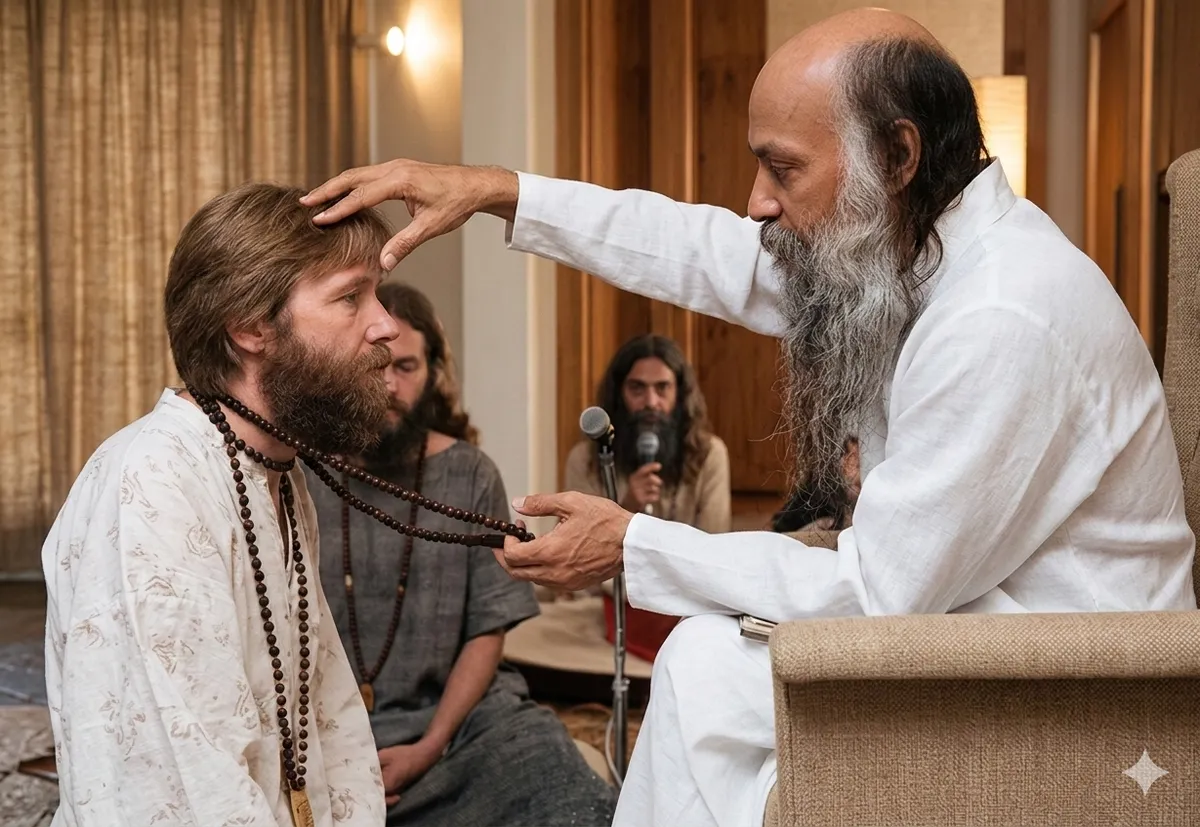
"Nowhere To Go But In" is a profound exploration of inner awakening that challenges the traditional paradigms of spiritual journeys as external pursuits. Throughout this discourse series, Osho eloquently delves into the philosophy of turning inward, emphasizing that the real path to enlightenment lies within oneself. He argues that the quest for truth is not about moving toward a distant horizon, but about diving deeply into the psyche and soul, embracing the silence and stillness found therein. Osho's teachings in this series are anchored in the understanding that external pursuits often lead to a perpetual state of longing and dissatisfaction. Instead, by redirecting attention inward, one uncovers the inherent divinity and truth within. His discourse is laced with the insight that true liberation arises from self-awareness and the dissolution of ego, rather than from following dogmatic beliefs or external doctrines. In "Nowhere To Go But In," Osho invites listeners to shed preconceived notions and societal conditioning, advocating for a journey marked by meditation, introspection, and the courage to face one's own inner world. By doing so, one discovers the profound peace and bliss that awaits inside, making the series a timeless guide for seekers on the path to spiritual fulfillment.
-
Chapter 1: From the Alone to the Alone
Words deceive; true refuge is inward surrender—'Rama' as the indivisible ocean of being. Only by dying-to-ego and dropping words does oneness and freedom arise.
-
Chapter #2
Awakening, not learning, is true transformation: surrender the ego, die to habits, and be meditative—then Rama (the divine) becomes your only refuge.
-
Chapter #3
Repression buries vital impulses in the navel; witnessing reveals and burns them, reclaiming childhood innocence and freeing energy for spiritual awakening.
-
Chapter #4
Enlightenment is an inner happening, not caused by trees; shed social conditioning by entering nature as a stage, then turn inward and return to share realization.
-
Chapter #5
Freedom from fear comes by living fear fully until body-identification collapses; a true master intensifies the crisis to lead you into silence and love.
-
Chapter #6
Mantras concentrate the mind and create siddhis that strengthen ego; true spirituality dissolves desire and the self into emptiness, not the pursuit of power.
-
Chapter #7
True love is meditation - rare, deeply ego-dissolving; choose love or inner meditation. Rama-Sita exemplify total love beyond social marriage.
-
Chapter #8
Hanging between tigers and a ravine, a single taste can either blind us to death or reveal total presence; true surrender is dying, not clinging.
-
Chapter #9
Two birds on the tree of life: one indulges and suffers, the other witnesses in bliss — awaken to witness your doing to transcend misery and attain freedom.
-
Chapter #10
Educate children's intellect and teach meditation together: give them sharp minds and deep roots of innocence so they remain balanced, fresh, and fully human.
-
Chapter #11
Hotei's penny: meditation is the act of giving and continuous flow - drop the load, taste giving, return free; sensitivity needs catharsis and awareness.
-
Chapter #12
Release impulses in aloneness: transform sex, anger and dependency into inner, circular energy (Shivalinga) to attain orgasmic samadhi and true love.
-
Chapter #13
All is nature; you may fight and suffer, float and be happy, or dissolve into oneness — renounce the desire to win and the ego dies, leaving Rama as the final refuge.
-
Chapter #14
Mystic inversion: the doer dissolves as giving and receiving reverse; emptying enables true reception, and paradoxical koans point to the unstruck source.
-
Chapter #15
Awakening is rare; a Buddha's presence opens a fleeting door—one must break sleep, face life's hell, and surrender wholly (even doubts) to enter.
-
Chapter #16
A looming crisis: while the East abandons its living temple and the West seeks it, only turning inward—to Rama, meditation and contentment—can save humanity.