
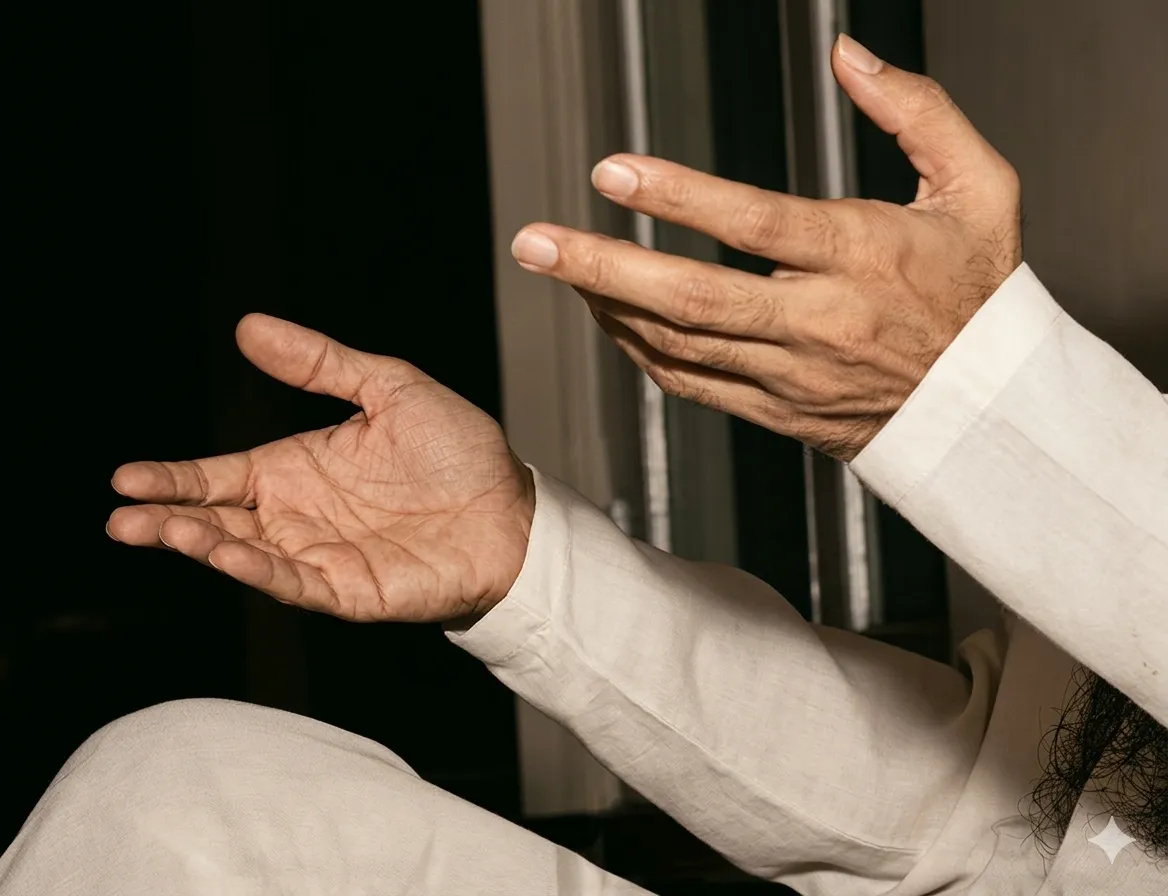
"Nahin Sanjh Nahin Bhor" is an introspective exploration of transcendent love and the role of the spiritual master in navigating the complexities of the human ego. Osho articulates a profound distinction between worldly love and the love imparted by a true master. While conventional love often caters to the gratification of egos, celebrating individual uniqueness, the love of a master subverts this by seeking to dissolve the ego, facilitating the emergence of a truer self. This paradigm shift is key to understanding the sometimes paradoxical nature of spiritual guidance, where the master's actions, perceived as harsh or antagonistic by the ego, are rooted in a transformative love aimed at engendering spiritual rebirth. Osho draws on historical examples, such as Jesus, to illustrate that spiritual truth often defies worldly logic; those who transcend the mundane structures are frequently misunderstood. By dismantling egoic constructs, the master facilitates a deep, existential renewal. "Nahin Sanjh Nahin Bhor" invites the seeker to embrace vulnerability, recognize the illusion of separateness, and ultimately surrender to a higher reality of unity and love beyond the superficial dichotomies of love and hatred. Through this radical inner work, Osho posits that true liberation and enlightenment are attained.
-
Chapter 1
Life is ash; true wealth is the eternal within. Surrender, find the Guru, become a fakir to hear the inner sound—will you stake everything for God?
-
Chapter 2
Concepts are pointers, not truth; half the journey is self-purification, half is grace—become a receptive vessel so inner sound, tears and divine descent can transform life
-
Chapter 3
Do what the guru says, not imitate his spontaneous being; accept his tailored medicine, drop worldly clinging, live distinct, and face small obstacles like ochre.
-
Chapter 4
Masters bring a love that dissolves the ego; the world answers with hatred, yet persecution proves their power—slander awakens curiosity and sparks transformation.
-
Chapter 5
Remembrance of the Divine must arise from the heart—wake in the fourth watch (deepest sleep) to meet God; abandon mechanical chanting and surrender to grace.
-
Chapter 6
Human effort sets the pot upright to receive God’s rain; effort invites grace but cannot substitute for it—prepare the heart to be worthy of descent.
-
Chapter 7
Life slips toward dusk; meaning is born when death is seen and the Guru’s grace awakens the timeless Self - die to the ego to become priceless.
-
Chapter 8
Saints risk words to point to the unsayable; words are pointers, silence is truth. Devotion is single longing (viraha); love's madness births union.
-
Chapter 9
Surrender to the inner witness dissolves pride and frees your unstruck anahat song; know the mind, ask 'Who am I?', awaken without fighting, live lotus-like.
-
Chapter 10
Authenticity arises when the Divine is seen as the doer: dissolve the ego, live as a non-doer; love, revolution and sannyas flower from inner surrender.