
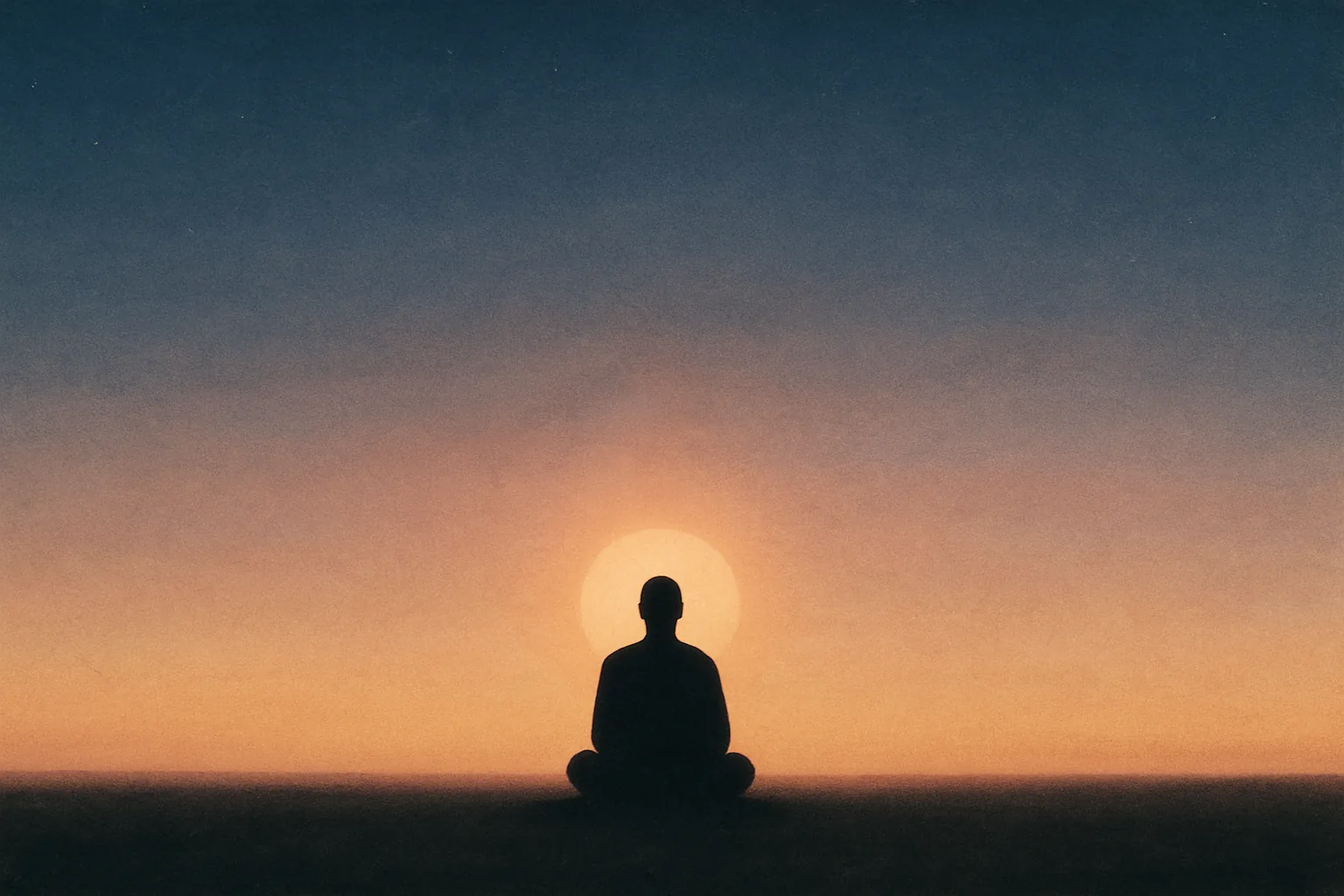
Witnessing Meditation for Mental Wellness is a simple, potent Osho-inspired Tantra practice centered on non-judgmental awareness. Echoing the guidance shared by Ma Dharm Jyoti—one of Osho’s earliest disciples—this method invites you to observe thoughts, emotions, and bodily sensations without trying to change them. In this gentle stepping back, clarity in thoughts begins to flower into clarity in action, easing the tumult that fuels stress and restoring a felt sense of inner balance.
Rooted in the living spirit of Osho’s work, this meditation aligns with modern insights that relaxation and stress modulation can support the body’s healing processes. By releasing the constant stream of mental noise and allowing silence to be felt within, you cultivate sharper focus, steadier decisions, and a kinder inner tone. Designed for our tech-saturated era, this practice helps you unplug, become mindful, and weave awareness into daily routines—empowering yourself and those around you with love, positivity, and peace.
Phase Instructions
First Stage: Arrive and Intend (2 minutes)
Sit comfortably on a chair or cushion with a relaxed, upright spine. Soften your gaze or close your eyes. Let the hands rest easily on thighs or in the lap. Silence notifications and place gadgets out of reach. Feel the ground supporting you. Set a clear, kind intention: to care for your mind and simply witness whatever appears. Allow curiosity and non-judgment to guide the session.
Second Stage: Soothing Breath to Settle (5 minutes)
Breathe in through the nose for a gentle count of 4 and out for 6, letting the exhale be easy and slightly longer. Receive each inhale in the lower belly; on each exhale, let shoulders, jaw, and forehead soften. If the mind races, pair the out-breath with a soft inner word like “release.” Track 10–12 slow cycles, letting relaxation spread through the body as the nervous system unwinds.
Third Stage: Open Monitoring—Witnessing Without Judgment (8 minutes)
Allow attention to widen. Notice thoughts, emotions, and body sensations as they appear. Label them quietly—“thinking,” “planning,” “sadness,” “pressure,” “hearing”—then let them pass without pushing away or following. Feel sensations where they arise and fade. If you get hooked by a storyline, gently return to breath and widen awareness again. Be the witness: present, spacious, and kind.
Fourth Stage: Release the Stream—Rest in Inner Silence (10 minutes)
With each exhale, imagine the constant flow of thoughts pouring into a vast, open sky. Notice the brief, natural pause after exhaling; let the mind rest there. When a tumultuous pattern appears, take one inner step back and watch it from a little distance, as if clouds passing. Feel the living presence of silence subtly filling the body. No effort to control—only allowing, softening, and seeing clearly.
Fifth Stage: Radiate Positivity and Peace (3 minutes)
Bring gentle attention to the heart area. On each inhale, receive clarity and ease; on each exhale, send love, positivity, and peace to yourself, then to loved ones, colleagues, and all who may be struggling. Silently offer: “May we be clear, at ease, and whole.” Let this goodwill spread as naturally as breath.
Sixth Stage: Integration into Daily Life (2 minutes)
Open your eyes softly. Sense your body, the room, and the day awaiting you. Choose one small action to weave awareness into routine—three mindful breaths before using any device, a minute of witnessing between tasks, or a slow walk noticing sensations. Carry the witness into decisions and conversations, returning to clarity whenever the mind grows noisy.
Core Benefits
- Non-judgmental awareness
- Clarity in thoughts leading to clarity in action
- Relaxation supporting the body's healing processes
- Sharper focus and steadier decisions
- Cultivating a kinder inner tone
What Osho Said About This Technique
Osho said that there was no need to try to still the mind, to stop the thoughts. He said that just as the traffic goes by and one remains on the sidewalk, unaffected, just a watcher, so one should simply witness the thoughts as they went by. We are not our thoughts, and recognising that we are the witness is enough. The very acceptance of the thoughts makes one more relaxed. The relaxation helps to create a distance, to separate oneself. To evaluate a thought as good or bad means that you are attached to your thoughts -- so one should not put labels on them.] ... put yourself aside, sit under a tree, and just watch the traffic. Soon, one day, the traffic disappears and the road is empty. Suddenly there is an interval and in that interval is meditation. But that interval cannot be created or cultivated.
Drik swaroop awasthanam akshataha to be established in one's own witnessing nature is akshat -- the unpolished and unbroken rice used for the worship.
Breathe, be aware. And if you are trying to be aware of your breathing, you cannot think, because the mind cannot do two things simultaneously -- thinking and witnessing. The very phenomenon of witnessing is absolutely, diametrically opposite to thinking, so you cannot do both. Just as you cannot be both alive and dead, as you cannot be both asleep and awake, you cannot be both thinking and witnessing. Witness anything, and thinking will stop. Thinking comes in, and witnessing disappears. Witnessing is a passive awareness with no action inside. Awareness itself is not an action. One day Mulla Nasrudin was very much worried, in deep brooding. Anyone could look at his face and feel that he was lost somewhere in thoughts, very tense, in anguish. His wife became alarmed. She asked, "What are you doing, Nasrudin? What are you thinking? What is the problem? Why are you so worried?"…
This witnessing is meditation. In this witnessing you will feel light filling you, bliss entering you and a divine presence everywhere: all around, within, without. But you are just to be a witness of everything -- of the light, of bliss, of divine presence. Just a witness. This is going to be the morning meditation. Then, remain a witness for the whole day. Remain more and more silent, witnessing yourself. If, during the day, you feel like screaming, jumping, dancing, you can do it by yourself. And if someone else is doing it, don't pay any attention to him; let him do it. But don't disturb others. Don't talk much, don't judge. For these eight days of the camp, cancel all judgements. Someone may go naked. You are not to judge. Remember only one thing: that whatsoever you are doing, do it with yourself only.
Osho, in the context of the practice of heedfulness (apramad), please explain the similarities and differences among the practices of witnessing, awareness, and tathata.
One more thought on tathata. A Zen fakir wrote a small song: “The geese fly across the sky. They have no desire that their reflections be formed in the still lake below. Yet the reflections form. The blue lake has no desire to catch the reflections of the geese. Yet the reflections are caught. Then the geese fly on and the reflections also fly away. The geese do not know they were caught in the lake; the lake does not know that the reflections aroused any curiosity, any stir, any disturbance in its bosom.” Tathata means such a being. Things happen. He is ready for all—wants to do nothing and has no complaint. That is why one of Buddha’s names is Tathagata. He loved that name. Even speaking of himself he would say, “The Tathagata passed through a certain village.” Tathagata means one who has attained tathata—thus come, thus gone.…
ओशो, अप्रमाद की साधना के संदर्भ में कृपया समझाइए कि साक्षी, सजगता और तथाता की साधना में क्या-क्या समानताएं व भिन्नताएं हैं।
तथाता का एक खयाल और मुझे आया वह आपसे कहूं। एक झेन फकीर ने एक छोटा सा गीत लिखा है। उस गीत में लिखा है कि आकाश में हंस उड़ते हैं। उनकी कोई इच्छा नहीं होती कि नीचे की शांत झील में उनका प्रतिबिंब बने। लेकिन प्रतिबिंब बन जाता है। नीचे की नीली झील पर से ऊपर जब हंस उड़ कर निकलते हैं, झील की कोई इच्छा नहीं होती कि हंसों का प्रतिबिंब पकड़े, लेकिन प्रतिबिंब पकड़ लिए जाते हैं। फिर हंस उड़ जाते हैं और प्रतिबिंब भी उड़ जाते हैं। न हंसों को पता चलता है कि झील में पकड़े गए थे, न झील को पता चलता है कि हंसों के प्रतिबिंबों ने झील की छाती में कुछ कुतूहल, कुछ हलचल, कुछ उपद्रव पैदा किया है। तथाता का अर्थ है ऐसा व्यक्तित्व। चीजें हो जाती हैं। सबके लिए राजी है। कुछ करना भी नहीं चाहता, कोई शिकायत भी नहीं है। इसलिए बुद्ध का एक नाम तथागत है। बुद्ध का एक नाम तथागत है। बुद्ध को बहुत प्रेम था उस नाम से। खुद भी वे कहते थे, तो वे कहते थे, तथागत एक गांव से गुजरे। तथागत का मतलब है: तथाता को उपलब्ध। …
The moment you witness something you become separate from it, you are the witness, the thing becomes an object -- the witnessed. If you are walking on the road, and you are also witnessing that you are walking -- not going along just like a robot, mechanical, everyday habit, the road is known, the legs know it, you can even walk with closed eyes. But walking with absolute alertness every step, every fall of a leaf, every ray of the sun, every bird flying in front of you, fully alert... slowly, slowly, you become aware that you are not the body that is walking, you are something inside which is witnessing. Once you have witnessed your body, you have got the knack of the method. Then you start witnessing your thoughts -- sitting silently, just watching the rush of thoughts, not interfering, not saying, "This is good. This is bad.
Common Questions
It is an Osho-inspired practice focused on observing thoughts, emotions, and bodily sensations without judgment.
It helps in easing stress by fostering clarity in thoughts and actions, and supports the body's healing processes by promoting relaxation.
This practice aids in unplugging from constant digital engagement, promoting mindfulness and awareness in everyday life.
The guidance was shared by Ma Dharm Jyoti, one of Osho’s earliest disciples.
It empowers individuals with love, positivity, and peace, benefiting both oneself and others.