
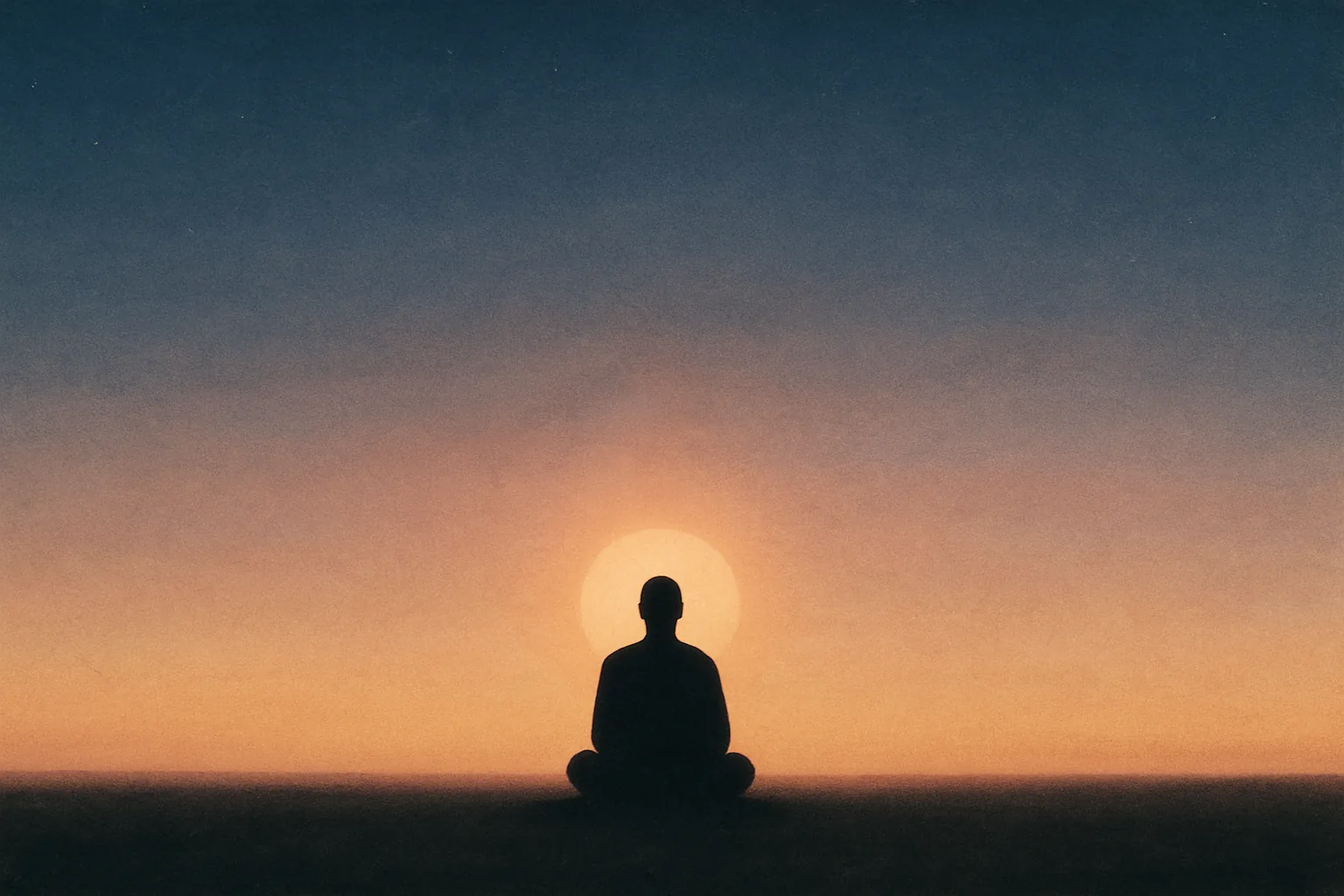
This meditation enters through the most intimate doorway Osho points to: the breath as the living bridge between body and mind, the meeting place of the physical and the subtle. By feeling and freeing the breath, you begin to sense the body’s natural rhythm and slide effortlessly into meditation. When the breath is full and unbroken, life itself feels complete; when it is held back, something in you stays withheld from love, speech, and being.
Across gently sequenced stages you learn to open the breathing body, watch the natural tide of inhalation and exhalation, and meet the patterned currents that normally run unconsciously. As those patterns unwind, emotional residues and old tensions can release, and a clear, quiet awareness dawns. The method is simple yet transformative: breathe fully, watch precisely, allow totally, and rest in the silence that remains.
Phase Instructions
First Stage: Arrive at the Bridge
5 minutes. Sit comfortably with an upright, relaxed spine (or lie down if needed). Let shoulders soften, jaw unclench, and belly be receptive. Feel the contact points with the ground and sense the body’s weight being carried. Set a gentle intention: to meet the breath as it is, fully and without interference. Place one hand on the belly and one on the chest. Notice the simple fact: breath is already moving you.
Second Stage: Open the Full Breath
10 minutes. Through the nose, begin to awaken a full-bodied breath without strain. a) Belly/diaphragm: Inhale to let the lower belly expand like a soft balloon; exhale to let it fall. b) Ribs: Feel a 360° widening around the lower ribs on the inhale; let them settle on the exhale. c) Upper chest/collarbones: Let the top of the chest gently rise last, then release. Cycle smoothly through these layers for several minutes. Allow natural sighs, yawns, or small stretches. The breath is invited, not forced; if effort appears, slow down and return to ease.
Third Stage: Watch the Natural Rhythm
15 minutes. Let the breathing settle into its own pace. Choose one anchor: the cool-warm touch at the nostrils, the rise-fall of the belly, or the widening-settling of the ribs. Simply watch: beginning, middle, and end of each inhale; beginning, middle, and end of each exhale. If helpful, lightly count breaths from 1 to 10 and then drop counting. When the mind wanders, notice it kindly and return to the exact feel of the next breath. Sense how breath unites body and awareness—nothing to change, only to know intimately.
Fourth Stage: Meet Patterns and Release
20 minutes. Gently deepen and smooth the breath so it becomes a relaxed, continuous circle—minimal pause between inhale and exhale—preferably through the nose (use the mouth only if you feel congested). Keep the breath comfortable and rhythmic, not forceful. As sensations, emotions, or memories surface, let them move through with the breath: tremors, warmth, tears, images—welcome and witness them without suppression or dramatization. If intensity rises, lengthen the exhale slightly and place a hand on the chest or belly. You may let a soft sound ride the exhale (like a gentle “mmm”) to assist release. Keep the spine free, the face soft, and awareness anchored in the flow of breathing.
Fifth Stage: Rest in Silence
10 minutes. Allow the breath to return to its natural pace. Sit or lie very still and feel the whole body breathing as one field. Drop all methods and preferences; simply remain in open, choiceless awareness. Notice the aftertaste of release: clarity, quiet, space. When ready to close, sense gratitude for the breath as the abiding bridge, and carry this easy contact with breathing into your next actions.
Core Benefits
- Feeling and freeing the breath leads to an effortless slide into meditation.
- The full and unbroken breath makes life feel complete.
- Opening the breathing body unveils a clear and quiet awareness.
- Unwinding patterns allows emotional residues and old tensions to release.
- The transformative method encourages precise watching and total allowing.
What Osho Said About This Technique
THE VEDAS HAVE SAID THAT BREATH IS BRAHMA. And it is right in a very subtle way. Breath is your life, and breath is also the bridge between the conscious and the unconscious, between your body and your soul. This bridge has to be used. If you can use this bridge rightly, you can go to the other shore. I wonder whether you have observed or not that your breath changes with your emotions. When you are angry, you breathe in a different way. Try to observe how you breathe when you are angry and then try to breathe differently while you are angry. You will not be able to be angry. You can be angry only in a certain way, with a certain rhythm of breathing. When you are in love, observe your breath: the rhythm, the music, the harmony. Disturb that harmony and the love will disappear.
And relax the body as well, so that the body does not hinder you in any way, so there is no strain. Whoever wishes to lie down may lie down right now. Leave the body loose as well. The eyes are closed; the body has been left loose. Whoever wants to lie down should lie down quietly. Now take your attention to the breath. Look within: breath is going in, coming out. Watch the breath. As soon as you begin to watch the breath, you will be standing at that place, at that door from which meditation opens. Begin to watch the breath—this breath has gone in. It is a very subtle thing; if you watch within carefully, it will begin to be seen. To be seen means it will begin to be felt: breath is going in, breath is coming out.
आंख चुपचाप बंद कर दें, ढीला छोड़ दें और आंख बंद हो जाने दें। और फिर बीच-बीच में भी आपको आंख खोल कर देखने की जरूरत नहीं है, क्योंकि देखने हम भीतर जा रहे हैं और भीतर आंख के खुले होने की कोई जरूरत नहीं है। आंख को बंद कर लें, ढीला छोड़ दें। और शरीर को भी शिथिल कर लें, ताकि शरीर से कोई आपको बाधा न रहे, कोई स्ट्रेन न रहे। किसी को लेटना हो तो पहले ही लेट जा सकता है। शरीर को भी ढीला छोड़ दें। आंख बंद कर ली है, शरीर ढीला छोड़ दिया है। जिसे लेटना हो वह चुपचाप लेट जाए। अब ध्यान श्वास पर ले जाएं। भीतर देखें: श्वास जा रही है, आ रही है। श्वास को देखें। जैसे ही श्वास को देखना शुरू करेंगे, वैसे ही उस जगह खड़े हो जाएंगे, उस द्वार पर, जहां से ध्यान खुलता है। श्वास को देखना शुरू करें--यह श्वास भीतर गई। बहुत बारीक चीज है, गौर से देखेंगे भीतर, तो दिखाई पड़ने लगेगी। दिखाई पड़ने लगेगी मतलब अनुभव होने लगेगा कि श्वास भीतर जा रही है, श्वास बाहर जा रही है। …
Osho, you have spoken of the four steps of meditation; please explain the full meaning of all four.
First, understand this clearly: three are only steps, not meditation; meditation is the fourth. The gateway is the fourth; the first three are only steps. Steps are not the door; they lead to the door. The fourth alone is the door—rest, pause, emptiness, surrender, dying, dissolving—that is the door. And the three steps lead you to that door. The fundamental basis of those three steps is one: if you want to enter rest, it becomes very easy after going into total tension. Just as a person who labors all day can sleep at night. The more the labor, the deeper the sleep. Someone may ask, “But labor and sleep are opposites; how can labor lead to sleep? The one who has worked all day should not be able to sleep!” And the one who has lazed on the bed all day should sleep! But the one who stayed in bed…
ओशो, ध्यान की चार सीढ़ियों की बात की है; उन चारों का पूरा-पूरा अर्थ बताएं।
पहली बात तो यह समझ लें कि तीन सिर्फ सीढ़ियां हैं, ध्यान नहीं; ध्यान तो चौथा ही है। द्वार तो चौथा ही है, तीन तो सिर्फ सीढ़ियां हैं। सीढ़ियां द्वार नहीं हैं, सीढ़ियां द्वार तक पहुंचाती हैं। चौथा ही द्वार है--विश्राम, विराम, शून्य, समर्पण, मर जाना, मिट जाना, द्वार तो वही है। और तीन जो सीढ़ियां हैं वे उस द्वार तक पहुंचाती हैं। वे तीन सीढ़ियों का मौलिक आधार एक है कि यदि विश्राम में जाना हो तो पूरे तनाव में जाने के बाद बहुत आसान हो जाता है। जैसे कोई आदमी दिन भर श्रम करता है तो रात सो पाता है। जितना श्रम, उतनी गहरी नींद। अब कोई पूछ सकता है कि श्रम करने से नींद तो उलटी चीज है। तो जिसने दिन भर श्रम किया है उसे तो नींद आनी ही नहीं चाहिए, क्योंकि श्रम और विश्राम उलटी चीजें हैं। विश्राम तो उसे आना चाहिए जो दिन भर बिस्तर पर पड़ा रहा और विश्राम करता रहा! लेकिन दिन भर जो बिस्तर पर पड़ा रहा, वह रात सो ही न सकेगा। इसलिए दुनिया में जितनी सुविधा बढ़ती है, जितना कम्फर्ट बढ़ता है, उतनी नींद विदा होती जाती है। …
Osho, what is the first experience of samadhi like?
You will know only when it happens. It cannot be said; at most a few hints can be given. It is as if, in the dark, a lamp is suddenly lit. Or as if a dying patient, right at the edge of death, suddenly finds a medicine that works; life’s wave, life’s thrill spreads again—so it is. As if a corpse becomes alive—such is the first experience of samadhi. It is the taste of nectar. The experience of the ultimate music. But it will be only when it happens; and only then will you understand. You will not understand by my saying it. It is as with love. How can anyone explain it? To someone who has never loved, never known love, no matter how many explanations you offer—he will hear it all and still ask, “I haven’t understood; please explain a little more.” It is like explaining light to…
तीसरा प्रश्न: ओशो, समाधि का पहला अनुभव कैसा होता है?
होगा तो ही जानोगे। कहा जा सके, ऐसा नहीं है। कुछ-कुछ इशारे किये जा सकते हैं। जैसे अंधेरे में अचानक दीया जल जाये, ऐसा होता है। या जैसे बीमार मरता हो और अचानक कोई दवा लग जाये...मरते-मरते कोई दवा लग जाये; और जीवन की लहर, जीवन की पुलक फिर फैल जाये--ऐसा होता है। जैसे कोई मुर्दा जिंदा हो जाये--ऐसा होता है समाधि का पहला अनुभव। अमृत का अनुभव है। परम संगीत का अनुभव है। पर होगा तो ही होगा। और होगा तो ही तुम समझ पाओगे; मेरे कहने से समझ में न आ सकेगा। प्रेम में जैसा होता है। अब कोई किसी को कैसे समझाये? …
Common Questions
This meditation uses the breath as a bridge between body and mind, focusing on feeling and freeing the breath to sense the body’s natural rhythm.
When the breath is full and unbroken, life feels complete, fostering a sense of wholeness in love, speech, and being.
As the patterned currents unwind, emotional residues and old tensions can release, leading to clearer awareness.
The core technique involves breathing fully, watching precisely, allowing totally, and resting in the silence that follows.
The ultimate goal of this practice is to achieve a state of transformative awareness and silence through mindful breathing.