
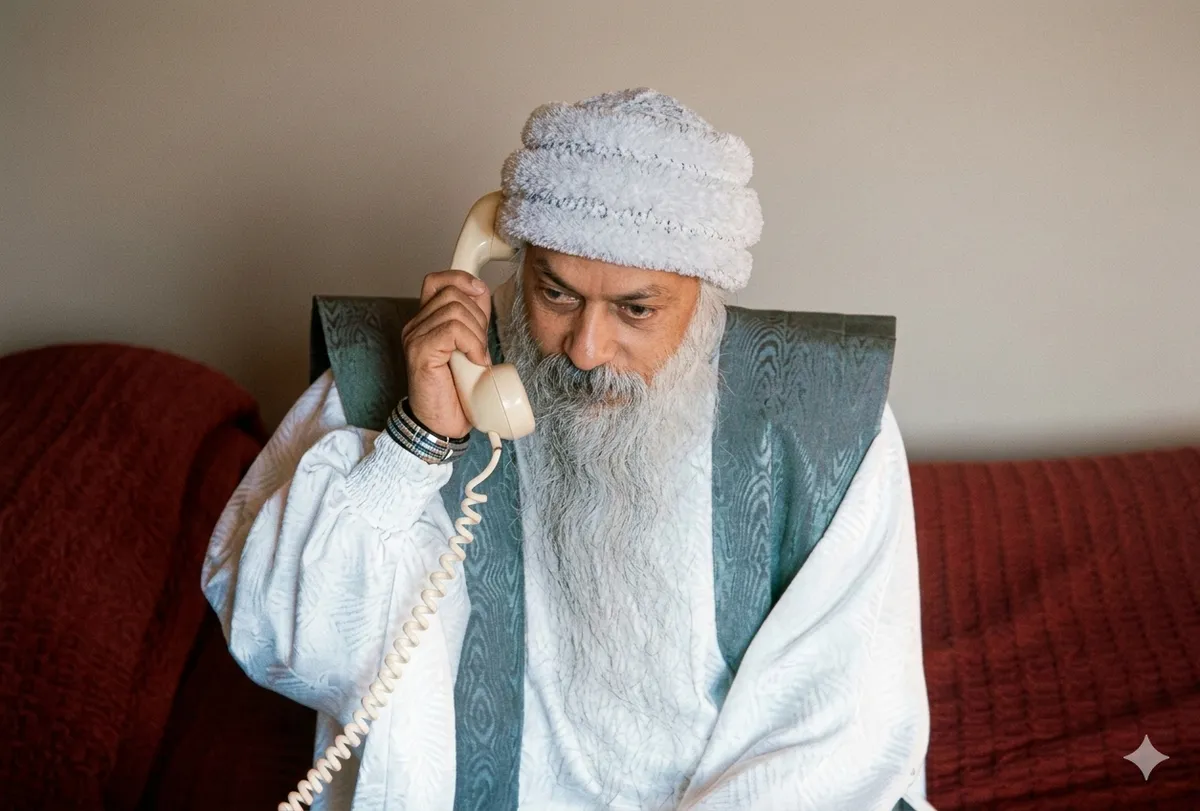
In the discourse series "Main Mrityu Sikhata Hun," Osho delves deeply into the seemingly contrasting concepts of consciousness and stupor, exploring them as interconnected aspects of the same reality rather than polar opposites. By challenging the conventional dualistic perspective, Osho emphasizes that elements often viewed as diametrically opposed—such as light and darkness, sleep and wakefulness—are merely different intensities along a continuous spectrum. Through this lens, he highlights the fluidity of human experience, illustrating how what we perceive as deep unconsciousness is but a dim form of awareness and vice versa. Osho's exploration is multi-layered, extending this non-dual understanding to broader existential themes. He suggests that life and death, too, are not in conflict. Instead, they are transformative stages within the infinite flow of existence. This realization invites a radical shift in perception, encouraging the seeker to dissolve rigid mental structures and embrace the harmonious balance inherent in life's paradoxes. By understanding these gradations, individuals can cultivate a sense of unity, achieving a more profound awakening to the essence of being, where every experience is seen as a manifestation of the same singular, vibrant life force.
-
Chapter 1
Life is amrit; death is ignorance—know life inwardly through dying while alive; meditation reveals the immortal Atman. Fear ends by inward, meditative return.
-
Chapter 2
Soul is one; rebirth is due to subtle and gross bodies—moksha dissolves both. Spiritualizing conjugal life shapes incoming souls; a few must awaken now.
-
Chapter 3
Meditation is a voluntary entrance into death: knowing death dissolves its fear and reveals immortal life; encounter death consciously to be free.
-
Chapter 4
Death and birth are two sides of the same coin: dying consciously makes birth conscious; meditate and witness pain and pleasure to be born awake.
-
Chapter 5
Know the Self inwardly; when the 'I' dissolves non-duality appears-God is revealed as 'what-is,' not a projection in things or temples and rites or dogma.
-
Chapter 6
Meditation is sleeping while staying awake—relax body, breath and thoughts and remain the inner witness; sleep is unconscious, meditation conquers death by awakening.
-
Chapter 7
Death is both the ultimate truth for the personality and unreal for the timeless Self; dissolve the superstitious mind by inquiry, not by exchanging chains.
-
Chapter 8
Why think of death? Death is moment to moment; seeing and loving it dissolves ego, ends fear, and by willing dying the wave becomes the ocean.
-
Chapter 9
The art of dying: life and death are degrees, not opposites; embrace death to dissolve attachment, transform energies, and enter meditation by letting go.
-
Chapter 10
Attention's density spans stupor and awakening; conscious dying dissolves death as a social delusion, and nirvana is knowing life and death are not believed.
-
Chapter 11
All sadhana is an antidote to dissolve the illusion of separation from the Divine; use practices to awaken, then discard them by decisive resolve now.
-
Chapter 12
Remain awake in death: train to be awake in pain and to live as the witness, creating distance from the body so fear, clinging and suffering dissolve.
-
Chapter 13
Polarity between man and woman functions like electrical magnetism to restore an outward tejas body; disciplined inner polarity, tantra and hatha can obviate a partner.
-
Chapter 14
Jati-smarana: past life memories can be re-lived by deep, conscious meditation, not hypnosis, after preparation; conception and the mother's mind shape destiny.
-
Chapter 15
Resolute inner will can contract life-energy to transcend the body, erase fear of death; small daily resolves cultivate the power that leads to witnessing and tathata.