
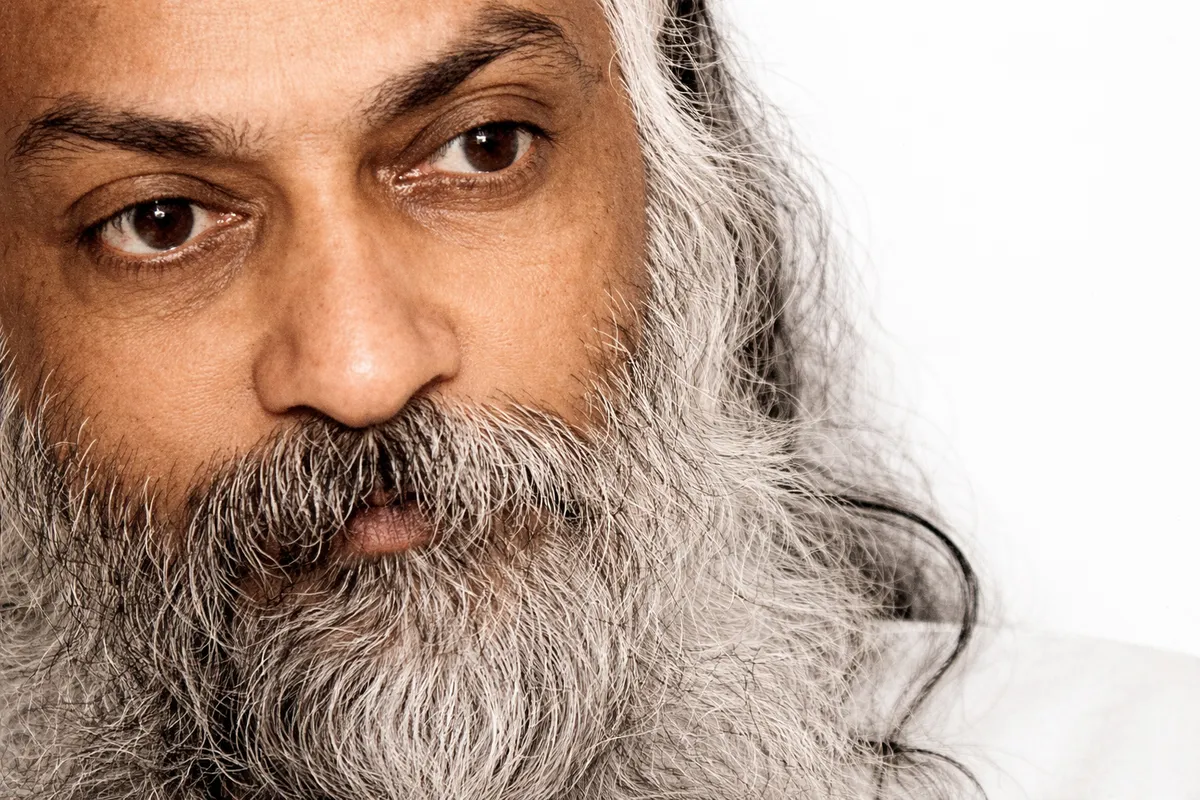
"Main Kaun Hun," a profound discourse series by Osho, embarks on an introspective journey to explore the essential question of identity: "Who am I?" Through these teachings, Osho navigates the complexities of self-discovery, delving into the layers of ego and consciousness that shroud the true self. The series invites seekers to recognize the transient nature of external identifiers—such as name, status, and societal roles—encouraging a shift towards the inner mysteries of the soul, or Atman. Osho, with his characteristic blend of wisdom and humor, dismantles conditioned beliefs and challenges listeners to experience their authentic nature beyond the superficial confines of the mind. He elucidates that the quest for true identity is not about accumulating knowledge or achievements but about shedding layers of illusion and embracing a state of pure awareness. Through meditation and mindfulness, Osho guides individuals towards an experiential understanding of their intrinsic connection to the cosmic consciousness. In "Main Kaun Hun," Osho offers not just a philosophical inquiry but a transformative path, urging an embrace of the unknown and a cultivation of stillness, where the essence of existence reveals itself. His teachings foster a radical shift from a life navigated by external validation towards one of inner truth and profound liberation.
-
Chapter 1
All outer identities are garments; true revolution begins when one drops all borrowed knowledge and holds the question 'Who am I?' until inner self awakes.
-
Chapter 2
Drop learned answers, dwell in 'I do not know' to rediscover life’s mystery; knock with a poetic, sensitive heart and ask 'Who am I?' to awaken.
-
Chapter 3
True knowing is born in the silence of not-knowing; only a receptive, loving heart can receive the Unknown, as the monk's conditioned begging reveals.
-
Chapter 4
Drop all supports and stop running; only in supportless solitude and non-doing does the Atman appear—know yourself to find true religion, not crowds.
-
Chapter 5
False personalities and borrowed beliefs block the search for truth; impartial silence, fierce inquiry and courageous thought can break the chain to self.
-
Chapter 6
Meditation is non-doing: lose the body, watch and transform the breath, ask 'Who am I?' intensely to dissolve limits and touch the vast, silent Self.
-
Chapter 7
Meditation is non-doing: remove inner obstructions, open the door of breath, surrender body and ask 'Who am I?'—allow energy and divine grace to descend.
-
Chapter 8
Seeing beauty often triggers possessiveness; cultivate a vast sense of beauty and discernment so beauty becomes non-sexual, dissolves ownership and frees desire.
-
Chapter 9
True faith is knowing beyond belief and words; eternal truth is wordless and must be realized, and meditation unveils inner bliss beyond logic's challenge.
-
Chapter 10
How should life be lived? Live without fixed principles: discover your unique path by entering life, accept with gratitude, learn from mistakes, remain fluid.
-
Chapter 11
Meditation's speed depends on means: with focused methods inner electricity and awakening can occur in minutes; Osho gives a 40-minute four-part practice.