
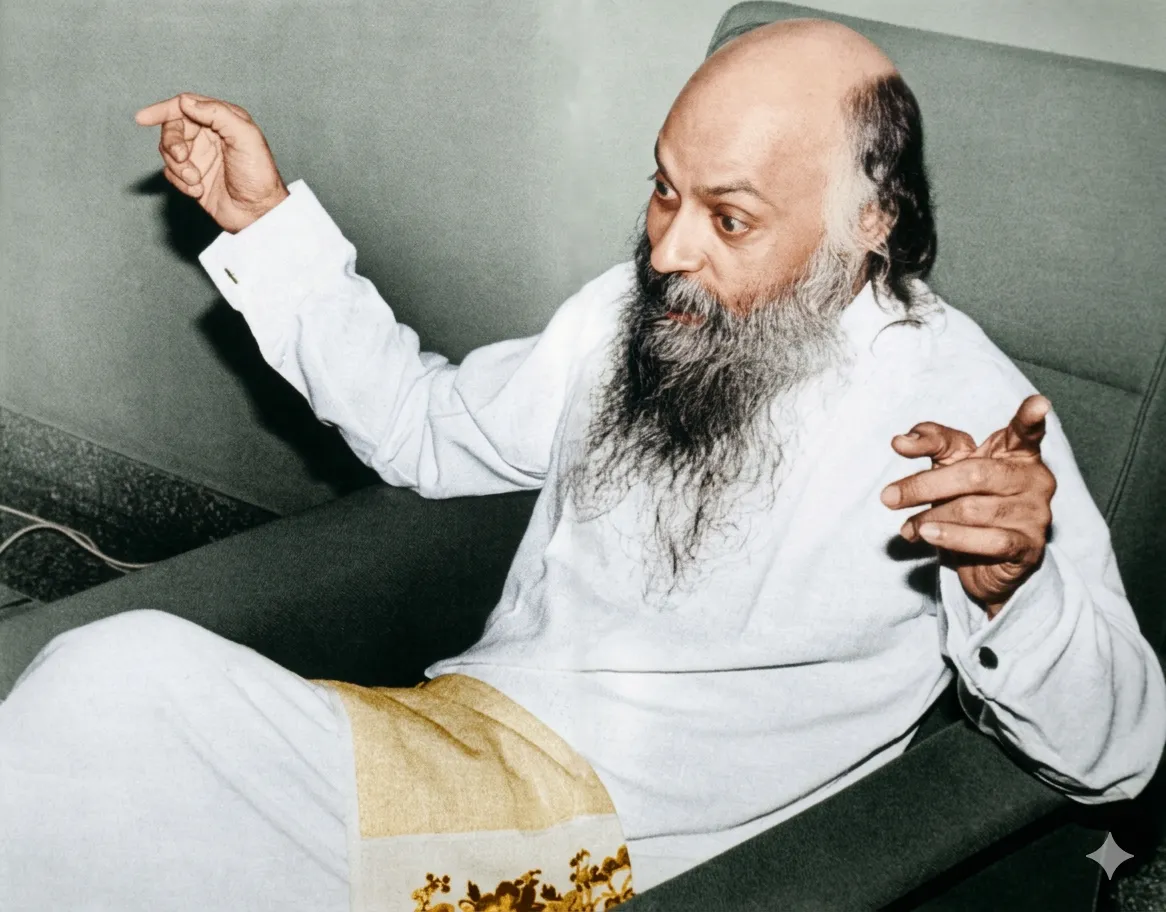
"Ma Tzu: The Empty Mirror" explores the profound teachings of the Zen master Ma Tzu, woven beautifully through the lens of Osho's insightful commentary. The series delves into the essence of Zen, where emptiness is not void but potential—a space where true understanding can blossom. Osho intricately unpacks the metaphor of the 'empty mirror,' revealing the Zen practice of reflecting without distortion, embracing existence as it is, without judgment or attachment. Central to Osho's discourse is the concept of enlightenment as the harmonious balance between form and formlessness, where dualities dissolve, and the seeker transcends ego to realize genuine freedom. His reflections emphasize living in the present moment, shedding the mind's perpetual chatter that clouds clarity. Infusing humor and paradox, Osho challenges conventional perceptions, encouraging a direct encounter with reality that is both simple and profound. This series is a deep dive into self-discovery, urging listeners to embrace the void as both a teacher and a mirror. The teachings, rich in paradox and profound simplicity, invite a radical shift in consciousness, aligning one's inner experience with the seamless flow of life. Through Osho's guidance, Ma Tzu’s teachings become a transformative journey into the heart of Zen wisdom.
-
Chapter 1: The mirror
Sitting cannot 'attain' Buddhahood; become an empty mirror; drop the mind, not posture; meditation is remembering your innate Buddha and become the pure witness.
-
Chapter 2: Sowing seed
Seeds, showers, and the buddha within: receptivity to teaching awakens the dharma-eye to formless samadhi—one inner step reveals the Tao now.
-
Chapter 3: Ripe plum
Zen's paradoxes point to one inexpressible truth: empty present-mind is Buddha; be a homeless, witnessing mirror—spontaneous, intentionless, alive to the now.
-
Chapter 4: Twisted nose
Ma Tzu's twisted nose jolts Hyakujo into immediate awakening: true seeing is an empty, non-judging watchfulness. Are you a mirror of presence or the mind?
-
Chapter 5: Like a cow
Ma Tzu's cow-like no-mind: drop thought and become empty, humble as a cow yet alert as a tiger; mind is Buddha, no-mind is the way, intimacy is empty heart.
-
Chapter 6: The hunter
A master as empty mirror: Ma Tzu's spontaneous, creative methods awaken the heart—his question to a hunter stops killing and sparks discipleship.
-
Chapter 7: To the source
Masters send disciples to the right climate; deprogramming religious conditioning reveals spontaneous being, so enlightenment flows and sharing becomes natural.
-
Chapter 8: This moment
Ma Tzu's shocks wake the buddha within: abandon comparisons, drop 'meaning' (as for Bodhidharma), and stand as the empty witnessing mirror now.
-
Chapter 9: No ripples
The self is an empty witnessing mirror — not any dharma; Ma Tzu’s river koan wakes the monk: drop defilements, be spontaneous, and make no ripples.
-
Chapter 10: Moon-face
Emptiness is not an object to love but the disappearance of the ego; Ma Tzu's paradoxes awaken presence, honesty and fearless, mirror-like awareness.