
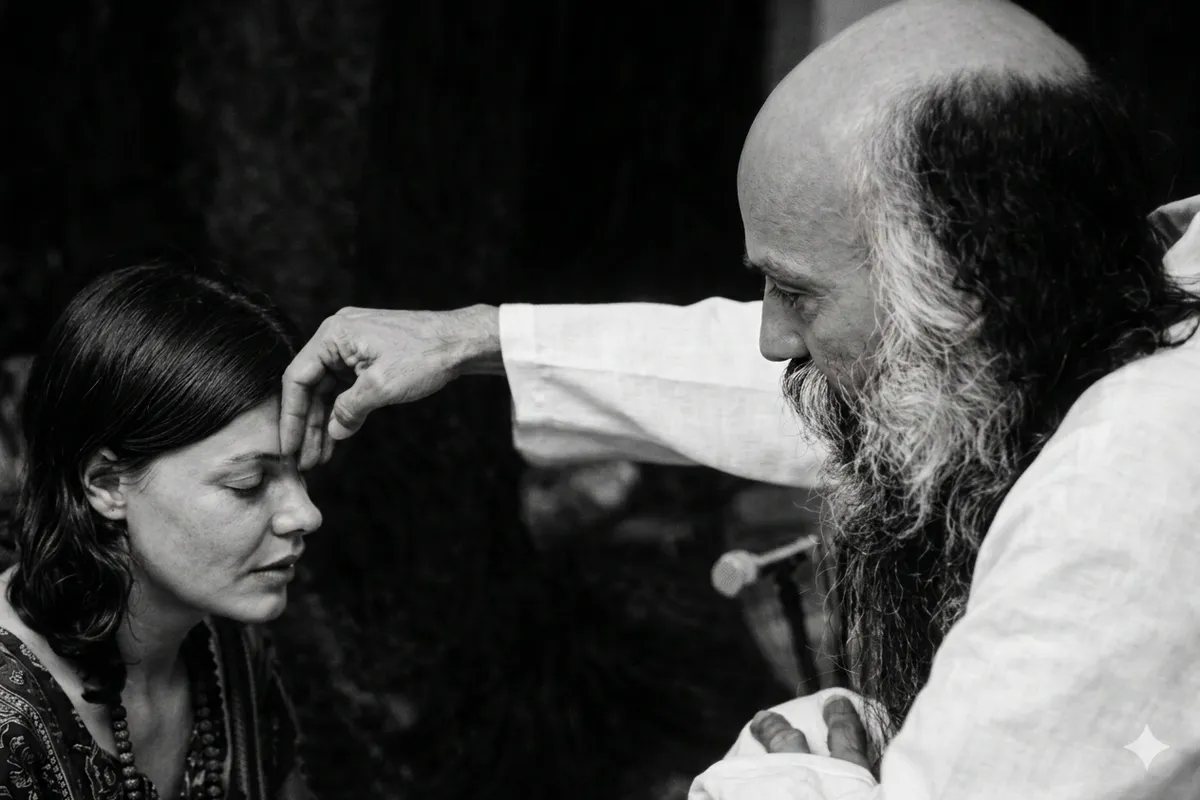
"Light on the Path" is a transformative discourse series in which Osho delves into the profound nuances of spiritual awakening and the journey of self-discovery. At the heart of this series lies Osho's deep exploration of consciousness and the subtle art of enlightenment. Through his incisive wisdom, Osho illuminates the path to inner freedom, urging individuals to transcend the limitations of societal conditioning and mental confines. He emphasizes the importance of awareness, presence, and the courage to face the unknown, advocating for a life led by authenticity and spontaneity. Osho's teachings challenge conventional beliefs and encourage a departure from dogmatic paths, embracing instead a direct, personal experience of truth. His insights bridge the ancient wisdom of mystical traditions with the modern quest for meaning, offering a fresh, liberating perspective that resonates with seekers across diverse backgrounds. The series is a profound invitation to embrace the chaos and beauty of existence, awakening to the reality that enlightenment is not a distant goal but a living, ongoing experience. "Light on the Path" serves as a guidepost for those willing to journey inward and embark on the ultimate adventure of discovering one's true self.
-
Chapter 1: Be unpredictable
Be ever-changing and unpredictable; practice witnessing: observe thoughts, moods and actions to touch silence and enlightenment, and honor each person's unique individuality.
-
Chapter 2: The real difficulty is to be with me
True devotion is tested by proximity: loving a living master forces you to drop expectations and the mind, while distant admiration remains a safe projection.
-
Chapter 3: Now our commune exists all over the world
Sannyas must preserve individuality, avoid becoming an organization; the commune now exists worldwide and a money-free, governmentless commune is envisioned.
-
Chapter 4: Darkness: the substance existence is made of
Darkness is the eternal ground—nirvana as blowing out the candle; embrace aloneness, drop imagination and missionary zeal, and be yourself radiating truth.
-
Chapter 5: The strength you feel is the strength of truth
True strength arises from authentic truth and roots, yet the highest blossoms are vulnerable—so devotees feel compelled to protect their teacher.
-
Chapter 6: Follow your inner being, then no government is needed
Gnostic self-knowledge transforms people so they need no government or religious authority; genuine freedom is born of inner discipline, connecting them.
-
Chapter 7: Awareness is magic
Awareness dissolves habits: drop judgment and observe their roots—smoking as a misplaced breast‑need shows how witnessing dissolves patterns and affirms life.
-
Chapter 8: Don't search for a home, search for yourself
Don't seek a permanent home; accept life's change and your inner homelessness. Find the seeker within — then the whole existence becomes your home.
-
Chapter 9: The master's function is not to save you
A true master does not save you; friendship with the awakened calls you to drop ego, take responsibility, and turn from horizontal striving to vertical being.
-
Chapter 10: I love the rascal saints
Can a saint be a rascal? Yes: outrageous saints refuse renunciation, using irreverence and disturbance to burn away ego and awaken true being.
-
Chapter 11: A true master can put you on fire
How can a master 'just walk past' and set someone ablaze? When innocent and available, his presence ignites the dormant back-of-mind—he's a catalyst, not a doer.
-
Chapter 12: Religiousness is interwoven into existence itself
God and organized religion must die for true freedom; religiousness, the inner impulse to grow, remains, freeing leaders and followers to mature.
-
Chapter 13: Whenever there is a sannyasin of mine, I am there
A buddhafield is an awakened presence radiating like one sun mirrored by many; sannyasins act as reflections, spreading love, meditation and transformation.
-
Chapter 14: Say it with your totality
Words cannot convey enlightenment; the effort to speak awakens seekers. Speak wholly—tears, silence and presence move hearts even when truth is unsayable.
-
Chapter 15: With a master the long journey can be cut short
A true master - one who loves, not owns - cuts the endless solo search for truth by removing false doors, offering methods and the first taste of silence.
-
Chapter 16: I want a meeting of east and west
East and West must merge: cathartic meditations and Western therapies cleanse conditioned minds so seekers can lose the mind and find the inner treasure.
-
Chapter 17: No-mind is emptiness and fullness together
No-mind transcends all psychology: a pure, spacious witnessing that is simultaneously empty and overflowing; Buddha-psychology beyond conscious and unconscious.
-
Chapter 18: The mind is a deceiver
Mind creates the illusion of having arrived; seekers get trapped in dream-enchantments. The master exposes maya, restores waking awareness, and guides toward true vision and samadhi.
-
Chapter 19: The path of truth is only for gamblers
Disciple's path demands total 'Yes'—receptivity and courage to gamble everything; masters choose subtly, yet they also need disciples to share and grow.
-
Chapter 20: Nobody can expect consistency from me
The world clings to the known; only a courageous few will take the well. Truth demands leaving the crowd, embracing the unknown and growing, not consistency.
-
Chapter 21: Nature is not anguish, it is blissfulness
Nature is bliss; mind's doubt hides our natural joy—neglect the conditioned mind, welcome fleeting trust and love to reclaim lasting freedom and celebration.
-
Chapter 22: The real remains silent
Ego is an artificial, obedient substitute that hides the silent real self; disobedience and deprogramming awaken inner truth and freedom through love.
-
Chapter 23: Cities have made the human being inhuman
Cities corrupt life: return to villages and communes, destroy power that profits on misery, restore loving, creative, non-legal relationships and inner freedom.
-
Chapter 24: Sex and death: two poles of one energy
Why feel sex and death together? They are two poles of one energy: sexual peaks can summon death-like awareness; disciplined love can transform it.
-
Chapter 25: The master creates a lovesphere
True guidance arises in inner silence, not voices; a master is love who creates a lovesphere allowing non-attached opening, presence and fearless living.
-
Chapter 26: The moment you find the truth, everything stops
Seeking truth can be more ecstatic than finding it; finding brings eternal stillness that ends the chase-choose master or solitary path with honest motive.
-
Chapter 27: Dissolving into the universal: a silent song of am-ness
Growth moves from dialectical pairs to non-dual am-ness; find the middle samata to transcend love/hate. Orgasm points to meditation's timeless, nonsexual awareness.
-
Chapter 28: Act according to your insight
Admiration placates ego but pointing to a higher source provokes resistance—be discontinuous with the past, act on your insight and reclaim individual freedom.
-
Chapter 29: Nietzsche: a great freedom or a great danger
Nietzsche offers piercing insights and liberation from Christian dogma, but without meditation his brilliant mind risks madness—great freedom, great danger; meditation is essential.
-
Chapter 30: Utopia is possible
Utopia is possible when individuals dissolve their inner divisions through meditation; inner harmony creates a compassionate society, not political revolution.
-
Chapter 31: The divine is the depth of diving into this moment
Playfulness and reverence are one: the divine is the depth of diving into this moment — unite Zorba and Buddha to reclaim life, joy, and choicelessness.
-
Chapter 32: Only your original face can become enlightend
Witnessing is a knack that appears in relaxed non-effort; a true master catches only the willing to reveal your original face, which alone can be enlightened.
-
Chapter 33: Truth is a dance in the heart
Truth is felt, not argued: the heart's realization makes one dance; masters answer the questioner, not the question, so varied words reveal one living truth.
-
Chapter 34: To relate with non-sannyasins is bound to be difficult
Deprogrammed sannyasins cannot easily relate to programmed non-sannyasins; Osho uses a van Gogh metaphor and urges compassion, existential proof not argument.
-
Chapter 35: Beyond the mind is your reality
Consciousness transcends gender and doing: meditation is genderless; use both active and inactive mind to move beyond mind into effortless awareness, samadhi.
-
Chapter 36: Enlightenment: the by-product of being in the present
Society is a construct; study the individual. Enlightenment cannot be pursued—it arises as a by-product of living wholly in the present moment.
-
Chapter 37: I don't have any disciples, i have only friends
No hierarchy: choose freedom and responsibility over organized discipleship; be individuals in a loose network of friends to grow spiritually.
-
Chapter 38: Music will remind you of me
Habit makes life mechanical; breaking habits restores conscious presence. Music, like meditation, uses sound to reveal silence and can remind you of the master.