
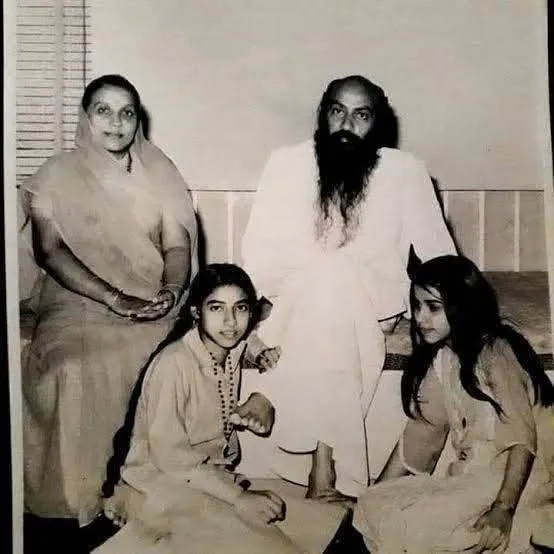
"Lagan Mahurat Jhooth Sab" is a thought-provoking discourse series by Osho, exploring the profound dichotomy between living in union with existence and living in separation from it. Osho delves into the existential choice of aligning with either the ego or embracing a state of egoless sannyas—a life intertwined with the cosmic rhythm. He illustrates this through the metaphor of a tree, rooted deeply in the earth, thriving in harmony with the universe, symbolizing a life of yoga, or union. This tree, vibrant with life, stands in stark contrast to one uprooted in ego, perishing without the solace of connection. Osho illuminates the essential nature of sannyas: an ego-free existence that experiences joy and fulfillment, akin to the dance of trees in the wind. Conversely, he posits that a life led by ego—a mere drop battling the ocean—results in anxiety, fear, and struggle. Through these teachings, Osho emphasizes that the path to true bliss and immortality lies in realizing our intrinsic connection to the universe, transcending the illusion of separateness into a holistic communion with all of existence. The series serves as an invitation to embrace the unity and bliss of a life lived in sannyas.
-
Chapter 1
Lagan and muhurat are all lies: only the present hour of remembrance is auspicious. True religion is dying into the Beloved, not astrological postponements.
-
Chapter 2
Worldly love is a pretext pointing to the Divine; life is a crumbling wall with a crow—use love's longing as a pointer toward God, not an end.
-
Chapter 3
Four mahavakyas unfold a graded path: dissolve the personal 'you' into That, recognize you as Brahman, and culminate in the disciple’s cry 'Aham Brahmasmi'.
-
Chapter 4
Mind binds or frees: attachment to objects creates bondage, while awareness ripening through life’s experience dissolves attachment; drop commentators, not life.
-
Chapter 5
Sila is inner, meditative conduct, not external character; without it truth, tapas, japa, knowledge and art are fruitless. Samadhi transforms life.
-
Chapter 6
Abandoning actions or declaring sannyas is false renunciation; true sannyas is nirbija samadhi—inner non-dual realization tested in the world and daily life.
-
Chapter 7
Surrender the ego to the Master as a device: letting go reveals your true nature; mere hearing or ritual wastes learning like water from an unbaked pot.
-
Chapter 8
Purity of intake (not just food) purifies sattva and steadies remembrance; trust is the soul’s currency—keep trusting despite deception to awaken.
-
Chapter 9
Ego's fall reveals bliss within: yoga is union with existence. Ecstasy is found now by removing the veil of ego—small inward effort, not outer seeking.
-
Chapter 10
Awakened human-ness, the burning thirst for freedom, and the refuge of a Mahāpuruṣa are supremely rare; when they meet it's divine grace—yet pride can still make you miss.