
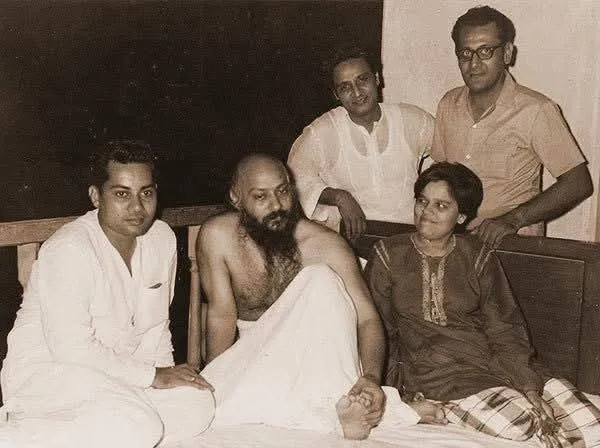
"Krishna: The Man and His Philosophy" is a profound exploration by Osho into the multifaceted and enigmatic nature of Krishna, who is often regarded as both divine and supremely human. Osho embarks on a journey to unravel the complexities of Krishna's life, world, and teachings, shedding light on the apparent contradictions that define his persona. He delves into Krishna's essence, portraying him as a complete expression of life itself, one who embraces both the sacred and the mundane without conflict. Osho illustrates how Krishna's philosophy transcends conventional morality and enters the realm of total acceptance, love, and celebration of life. This discourse challenges the listener to move beyond rigid societal norms and spiritual misconceptions, venturing into a space of inner freedom where joy and divinity coexist harmoniously. Through his contemplative and often provocative style, Osho invites seekers to understand Krishna's role not merely as a mythical figure but as a vibrant symbol of the ultimate flowering of human consciousness. He emphasizes Krishna's relevance in contemporary times, urging individuals to embrace their totality and live with spontaneity and awareness.
-
Chapter 1: The Future Belongs to Krishna
Krishna embodies future life-affirmation, accepting opposites: body and soul, love and war, and teaches Mahabharat's blame lies with human choice, not to him.
-
Chapter 2: Krishna is Complete and whole
Krishna embodies choiceless, total acceptance of life—wholeness through emptiness—and becomes the future’s life‑affirming symbol beyond renunciation.
-
Chapter 3: Where Buddha Ends Krishna Begins
Krishna begins where Buddha ends: egolessness by expansion, sudden remembering of one's cosmic self, unlike Buddha’s negation and gradual sadhana.
-
Chapter 4: Religion has no History, It is Eternal
Religion is timeless; biographies record just the shadow. Enlightenment abolishes time—Krishna's dates are irrelevant; being true to your dharma matters.
-
Chapter 5: Follow No One but Yourself
Krishna is born causeless, living life as leela—beyond social causes and purpose—inviting inner freedom: understand him, but truly follow only yourself.
-
Chapter 6: Nudity and Clothing Should go Together
Krishna embodies birth's dark mystery and life's victory over death; contradictions unite. Nudity and clothing are natural together; Radha completes Krishna.
-
Chapter 7: Make Work a Celebration
Marriage as institution strangles love; life should be a celebration where work serves joy, not duty—Krishna's play frees love, creativity, and new social forms.
-
Chapter 8: He Alone Wins who does not Want to Win
True victory is effortless: one who does not seek to win wins. Krishna's play absorbs attack, a guru catalyzes divine vision, and death frees for rebirth.
-
Chapter 9: The cosmos is a Dance of Opposites
Life is a cosmic raas - the dance of opposites where purusha and prakriti meet, birthing overflowing bliss; Krishna's dance embodies creation and union.
-
Chapter 10: Spiritualism, Religion and Politics
Spiritualism embraces whole life; Krishna engages politics without dogma, choosing lesser evils to protect dharma rather than insist on purity of means.
-
Chapter 11: Draupadi: A Rare Woman
Love is a boundless state, not possession; Draupadi loved many without jealousy, Sudama's humble gift shows true giving, Krishna embodies choicelessness.
-
Chapter 12: Discipline, Devotion and Krishna
Krishna shows multidimensional wholeness: devotion (upasana) dissolves the ego into union; samyama means equipoise, not repression, unlike renunciative paths.
-
Chapter 13: Krishna Goes to the West
Krishna's eternal ocean can be reached through meditative 'seed' symbols, names and ecstatic kirtan, yet true awakening transcends all words and forms.
-
Chapter 14: Action, Inaction and Non-Action
Krishna's path is self-remembering: remembrance arises via inaction—action without a doer—rooted in non-action (breathing); seven-body staged disciplines misread him.
-
Chapter 15: Life After Death and Rebirth
Visions of deities are either mental projections or oceanic consciousness; true Krishna-experience is no‑mind, and voluntary surrender unfolds individuality.
-
Chapter 16: Atheism, Theism and Reality
Realization dissolves the witness and names; spiritual truth must be personally attained, not borrowed from scriptures or claimed as bodily immortality.
-
Chapter 17: Don't Imitate, Just be Yourself
Imitation kills the individual; truth is beginningless (anadi). Krishna models fullest self-flowering - know him and awaken your own authenticity.
-
Chapter 18: Non-Attachment is not Aversion
Non-attachment transcends both clinging and aversion: accept all like a mirror, witness without identification, and return to your innate silence.
-
Chapter 19: Rituals, Fire and Knowledge
Rituals transformed into jnana-yajna and japa-yajna: fire of knowledge burns ego; act without attachment to results frees life from bondage.
-
Chapter 20: Base your Rule on the Rule
Krishna's non-attachment is total acceptance: choiceless surrender and unity with life, transcending neutrality, indifference, renunciation into joyous oneness.
-
Chapter 21: Choose the Flute or Perish
Choose life's flute, not the cross: affirm bliss, live in the moment, and fight for life when necessary; suffering is a choice that spreads pain.
-
Chapter 22: Sannyas is of the Highest
Neo-sannyas is positive, life-affirming freedom: live as an actor and witness in the world, take short or lifelong vows, and ochre clothes remind meditation.