
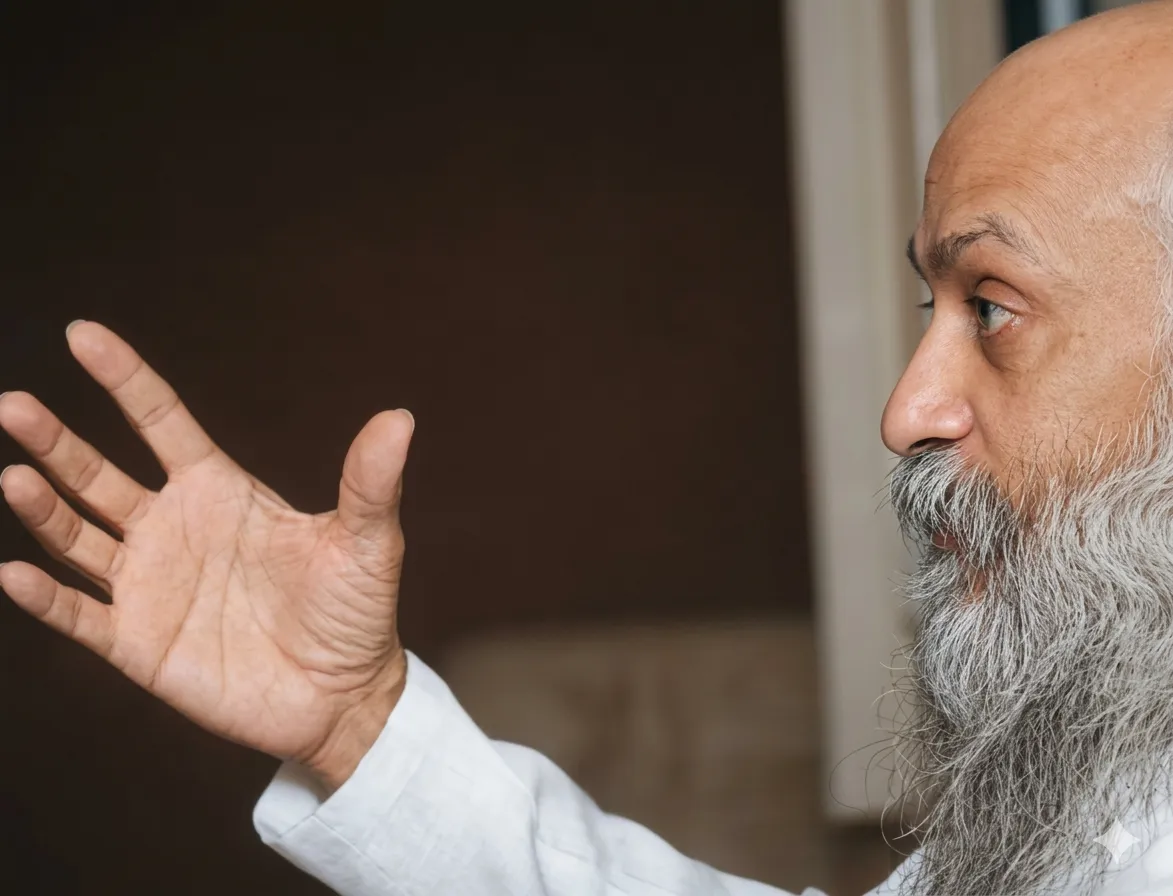
Karuna Aur Kranti is a deeply reflective discourse series by Osho that explores the dichotomy between societal conventions and spiritual awakening. Through an allegorical narrative, Osho presents a planetary society afflicted by a self-imposed madness, which symbolizes humanity's tendency to elevate certain ideologies to the point of absurdity. In this narrative, the populace is divided into two groups: those adhering strictly to nonsensical traditions (the sannyasins) and those burdened by guilt for failing to adhere fully (the worldly). Osho uses this metaphor to highlight how rigid adherence to dogma, whether religious or cultural, leads to spiritual stagnation and internal conflict. The series delves into themes of compassion (karuna) as a gateway to personal revolution (kranti), advocating for an approach to life that embraces flexibility, awareness, and authenticity. Osho challenges us to question the societal norms that confine us and suggests that true enlightenment comes from understanding the balance between societal expectations and individual spiritual needs. Overall, this discourse encourages a transformative journey towards self-realization, urging individuals to break free from psychological and cultural shackles, and to live life with a fuller awareness.
-
Chapter 1
Humanity hangs on self-fashioned crosses; only radical compassion — acceptance of our whole, natural self — can revolutionize and heal our fragmented being.
-
Chapter 2
Surrender by letting go - float, vanish, accept 'suchness'; drop doing so the mind becomes empty and in that emptiness bliss/Paramatma enters.
-
Chapter 3
Repression is a boulder crushing man's inner spring, turning love into hoarding and disease; liberation is removing the rock and restoring natural wholeness.
-
Chapter 4
Society is a zoo of invisible cages; family is the first prison that binds children to the past and severs them from nature—can individuals be freed to reconnect with the cosmos?
-
Chapter 5
Humanity lives upside down - mind heavy, body neglected; true liberation needs roots, whole-body living and trained senses; how to reverse the headstand.
-
Chapter 6
Peace and revolution reconciled: inner stillness is the pin enabling outer change; compassion should precede change; transformation rests in seeing the Whole.