
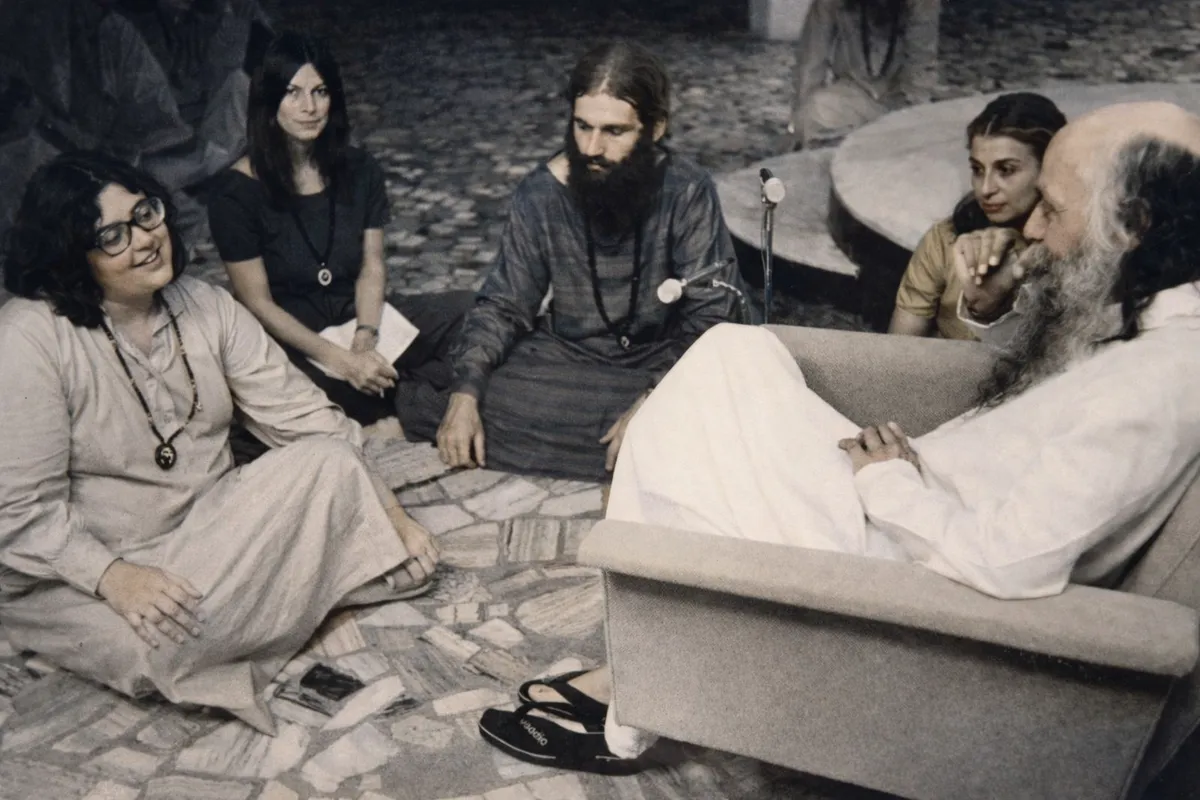
"Just Like That" is a series of profound spiritual discourses by Osho that guides readers on a journey toward self-discovery and enlightenment. At its core, the series explores the delicate art of embracing life's flow without resistance. Osho invites listeners to experience life by letting go of preconceived notions and mental constructs, urging them to perceive the world with fresh, unencumbered eyes. He delves into the concept of spontaneity, emphasizing that true wisdom and clarity arise naturally when one is present and unburdened by the past or concerns of the future. Throughout the series, Osho tackles the paradoxes of existence, weaving humor with deep insight, to challenge and dismantle conventional belief systems. His teachings encourage a return to simplicity and authenticity, aligning with the natural rhythm of the universe. Distinctly, Osho highlights the importance of inner silence and meditation as pathways to connect with one's true self. This series serves as a reminder that profound spiritual transformation can happen effortlessly when one is open and receptive, underlining Osho's unique perspective that life's ultimate truths are best accessed through a state of alert passivity and joyful acceptance.
-
Chapter 1: The unteachable teaching
Truth cannot be taught but can be learned: only receptive, surrendered disciples allow a master’s silent transmission; can you learn to let him teach?
-
Chapter 2: Why have you come?
Why you seek determines your growth: a true master reveals your own seed, but wrong motives—ego, attention, miracles—produce false growth and ruin.
-
Chapter 3: An open and shut case
Nature's door is always open; seekers must knock continually to wake from unconsciousness—practice breaks sleep so the inner door can be realized.
-
Chapter 4: Asking the experts
Experts and doctrines bury living experience; existence is a mystery to be lived, not a problem to be solved—trust your heart over certified knowledge.
-
Chapter 5: Mind games
Suspicion and thought project realities (axe parable): the mind is a transparent prison. Drop mind—alert, passive meditation—no-mind reveals true reality.
-
Chapter 6: Blind man's buff
Ignorance is chosen: ego prefers blindness to self-knowledge because awakening brings painful, cleansing chaos; one must risk suffering to be free.
-
Chapter 7: A man who loved seagulls
Life's treasures come as gifts when you relax and let go; happiness, love and meditation cannot be pursued but are received—be available, not demanding.
-
Chapter 8: Beyond mother's knees
Do not judge by sight, hearing or words; true transmission is the master imparting himself — only through surrender, readiness, patience and blind trust.
-
Chapter 9: When Shibli is absent
Ego's presence blocks God; spirituality is learning to be absent—nonidentification—shown when Junnaid calls Shibli 'absent' and ego returns, teaching the witness.
-
Chapter 10: Just a small coin
Life exists only in the present: exchange future promises for the single coin of now - Uwais: guarantee tomorrow and I'll accept, otherwise let me live today.