
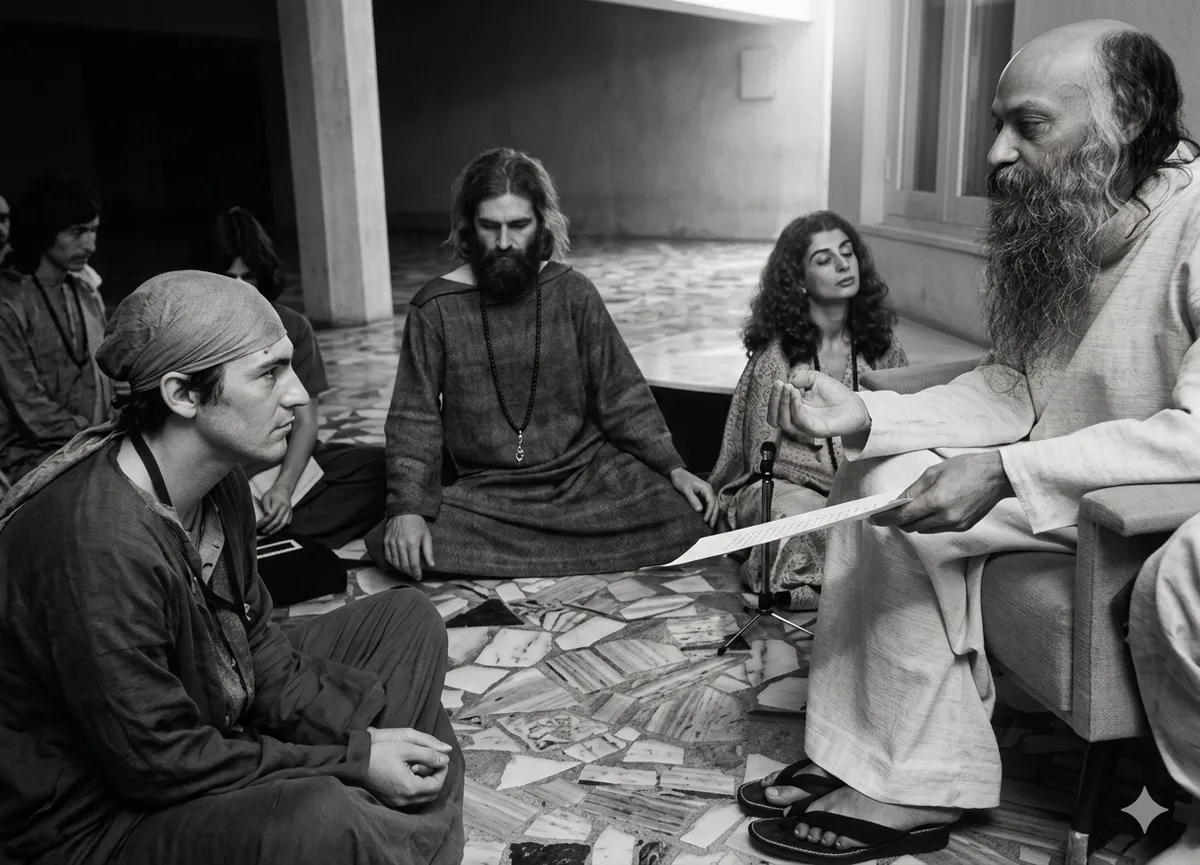
"Jin Khoja Tin Paiyan," a discourse series by Osho, delves deeply into the intricate relationship between the body, mind, and spirit, highlighting a profound understanding of holistic health. Osho explores the interconnectedness of the body’s organs, underscoring that each part plays a vital role within a harmonious system. Through evocative narratives, he illustrates how the mouth and stomach are not merely physical components but integral to mental and spiritual well-being. Osho challenges conventional understanding by asserting that when one part of the body assumes more responsibility than it is designed for, it results in imbalance, affecting one's holistic growth and spiritual development. This is metaphorically extended to the realms of human experience, where an overemphasis on certain aspects of life can lead to a lopsided existence. By drawing an analogy to a dervish's misunderstanding of bodily functions, Osho invites seekers to look beyond surface-level appearances, stressing the importance of introspection and self-awareness. In this series, Osho encourages seekers to cultivate a deep awareness of their inner and outer worlds, recognizing the subtle interplays that define their being. His teachings guide individuals to seek a balance that integrates physical vitality with mental clarity and spiritual insight, fostering a path to true enlightenment.
-
Chapter 1
Awaken the dormant inner eye by risking your whole self, drop fear and habits, let the kundalini rise through disciplined silence, meditation and acceptance.
-
Chapter 2
Life is Shakti; through fearless surrender the ocean of energy enters the drop—use breath, catharsis and 'Who am I?' to rest in timeless knowing.
-
Chapter 3
Kundalini awakening risks dissolving the old self; meditation is a deeper death. Yet danger opens to true life; total surrender leads to the Divine.
-
Chapter 4
Meditation needs your effort to open the door; God's grace then descends. Three preparatory stages build tension so the fourth, true meditation, can occur.
-
Chapter 5
Intense breath, catharsis and wild movement dissolve the body; then sustained Who am I? inquiry and silent dying reveal inner light and union.
-
Chapter 6
Answers meet the thirsty, not the merely curious: transformation is a sudden leap into spontaneous, honest being; 'Have you seen God?' is asked only when ready.
-
Chapter 7
Tao: freely living in one's svabhava yields bliss—stop thinking and witness life. Kundalini awakens through breath and the 'Who am I?' inquiry; grace catalyzes.
-
Chapter 8
Kundalini readies the body to unfold the soul: awaken inner reservoirs, not save energy; tire the outer senses so inner senses and ultimate dissolution arise.
-
Chapter 9
Chew thoroughly to free brain energy; breath can both heal and harm—unnatural breathing jolts stupor, offering liberation if practiced wisely amid risks.
-
Chapter 10
Kundalini rises from the personal 'well' yet leads to the one ocean: individual self dissolves into the Absolute; pranayama and intense breathing fuel awakening.
-
Chapter 11
Shaktipat is human-channeled Divine power; prasad is direct grace. Union of kundalini and grace triggers samadhi; prepare within, don't depend on others.
-
Chapter 12
God is energy, not a person; grace follows its law and can harm the unprepared. Sadhana readies capacity; avoid guru-dependence and counterfeit tricks.
-
Chapter 13
Kundalini is a psychic fourth-body event; true awakening demands measurable change in conduct. Shaktipat can bind or be exploited, so cultivate inner readiness instead.
-
Chapter 14
Seven bodies and chakras map inner obstacles and gateways: transform nature by understanding, search within not beg, move beyond bliss toward ultimate truth.
-
Chapter 15
Science can probe subtler layers up to the fifth self-body: matter becomes energy, mind is subtler matter, thought-waves and Om's echo are detectable.
-
Chapter 16
Om is a threshold symbol to be known, not a practice—chanting breeds trance. Shaktipat strikes the first body; prasad the fourth; proper preparation is needed.
-
Chapter 17
Inner harmony of the first three bodies is essential: awaken body, feeling and subtle layers before kundalini; otherwise descending energy can harm and derail growth.
-
Chapter 18
Union of inner masculine and feminine through progressive bodies dissolves duality; kundalini's fire transforms body, leading to samadhi and beyond.
-
Chapter 19
Body follows inner states; asanas and mudras can support but not produce meditation—begin inside, allow catharsis, seek true Divine initiation, not empty ritual.