
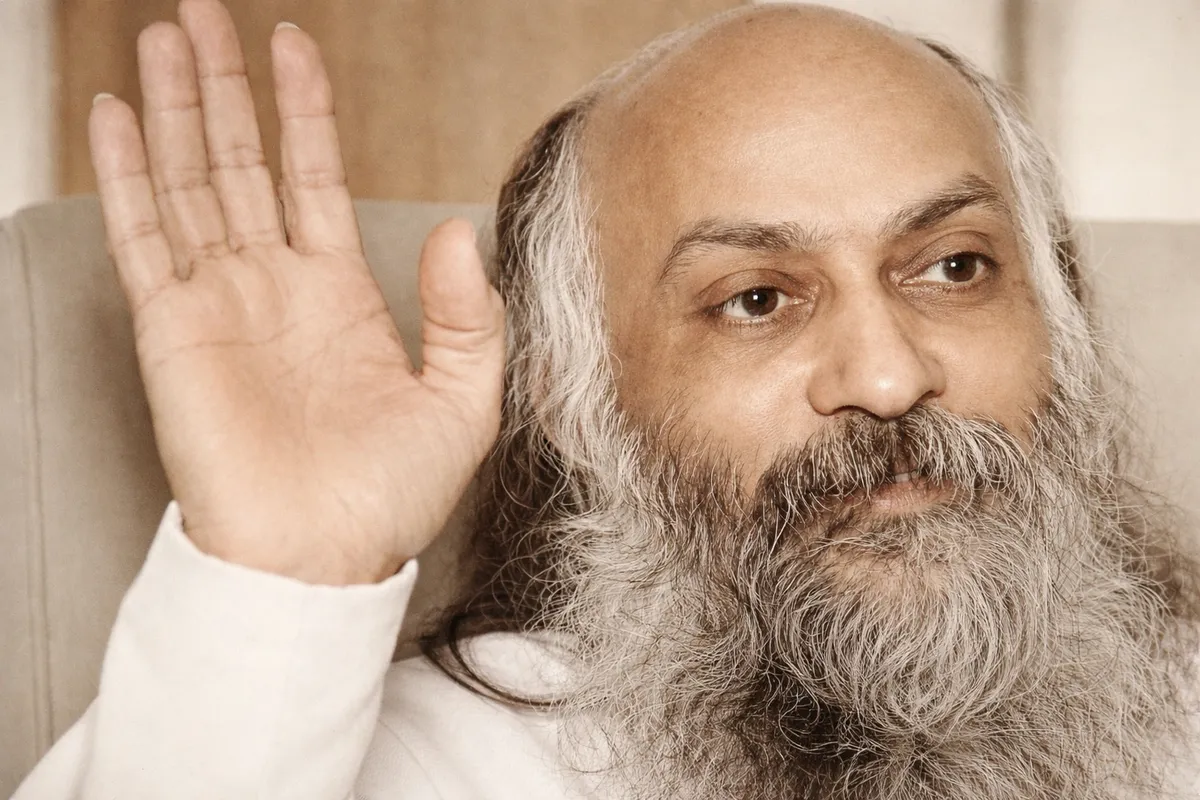
"God is Dead, Now Zen is the Only Living Truth" is a provocative discourse series by Osho that explores the evolution of human consciousness and spirituality in a post-theistic age. In these discourses, Osho challenges the traditional constructs of God, religion, and morality, which he sees as relics of a bygone era that no longer serve the quest for truth. He suggests that with the decline of institutionalized religion, Zen emerges as a pure and vibrant path that resonates with the intrinsic nature of being. Osho posits that Zen transcends dogma and doctrine, offering a direct, experiential approach to spirituality that aligns more authentically with the spirit of the modern seeker. Through exploring the essence of Zen, he encourages individuals to embrace meditative awareness and to live life with spontaneity and presence. This series emphasizes the importance of personal insight, inner freedom, and awakening to one's own truth rather than adhering to externally imposed beliefs. Osho's reflections throughout this series invite a reexamination of our understanding of divinity, suggesting that the true awakening lies in realizing the divine within ourselves and in the everyday miracles of existence. In essence, Osho redefines spirituality as a living, breathing reality, accessed through the immediacy and simplicity of the Zen approach.
-
Chapter 1: God is a puppeteer
God's death frees man, but without Zen that freedom becomes empty and mad; Zen's meditation fills the void, restoring rooted freedom and meaning.
-
Chapter 2: God is an insult to man
God is an insult to man: belief in a creator demeans existence; abandon prayer and scripture, move inward into no-mind and immediate meditation for liberation.
-
Chapter 3: God is just like tomorrow
God is dead: abandon consoling hopes; use the resulting emptiness to turn inward, discover your own consciousness and become one with existence.
-
Chapter 4: God is a lie
God is a human fiction; existence is impersonal, infinite and nonjudgmental. Prayer and projection make gods; liberation is seeing "Who bound you?"
-
Chapter 5: God is your insecurity
God is a projection of fear and insecurity; liberation begins by dropping God, finding the inner witness, and living spontaneous religiousness as true freedom.
-
Chapter 6: God is the original sinner
Religions turn humanity against nature to create guilt and dependency; freedom arises by reclaiming natural life and discovering the buddha within.
-
Chapter 7: God is the business of the priest
Freedom arises when inner witness replaces borrowed beliefs: drop priests and gods, awaken choiceless awareness so action becomes effortless, good, and natural.