
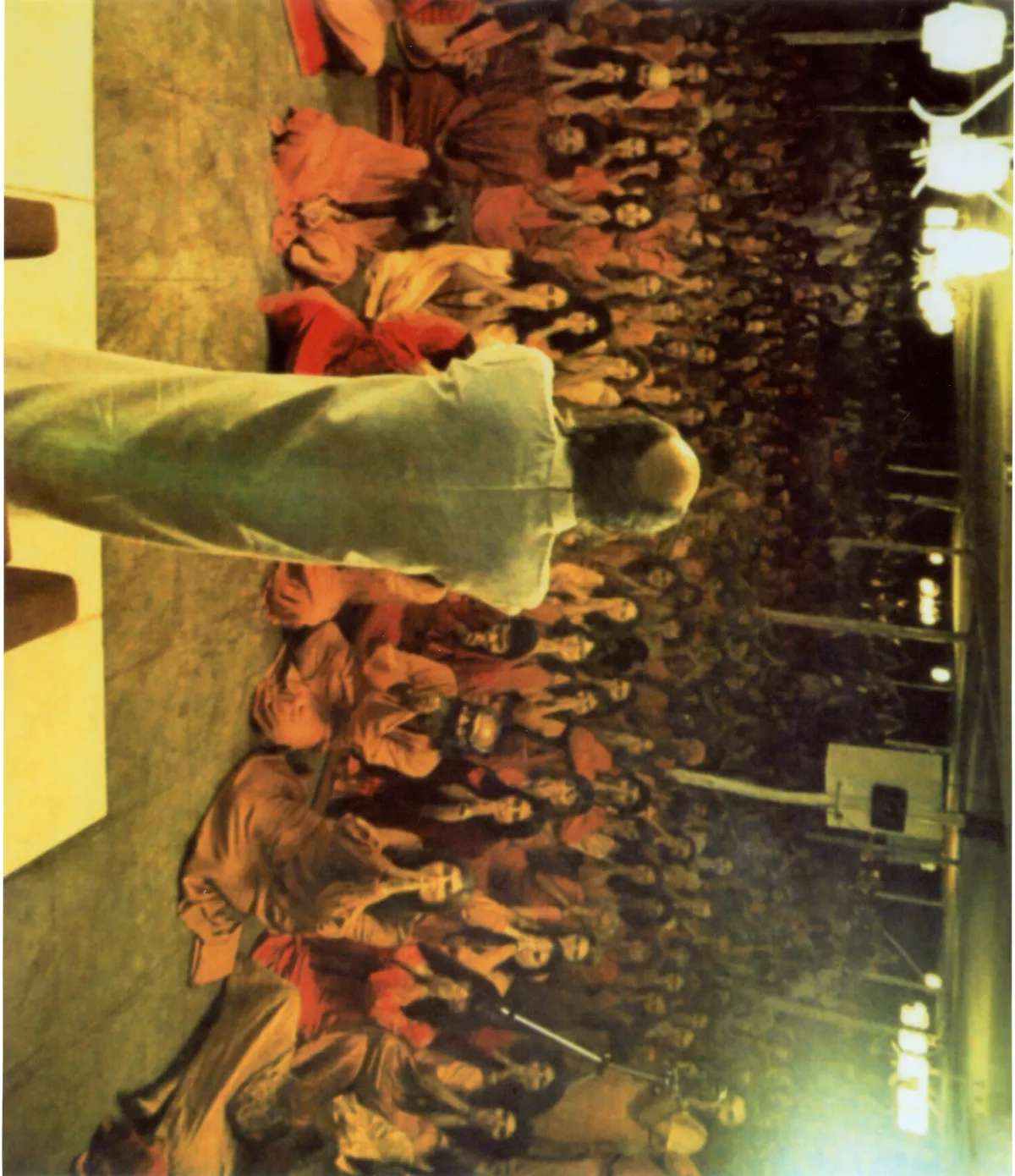
"From the False to the Truth" is a profound journey navigating the treacherous waters between illusion and reality, as articulated by the mystic Osho. This discourse series delves into the essence of truth, encouraging seekers to transcend societal constructs and personal delusions, propelling themselves towards an authentic existence. Osho elucidates that truth is not a distant horizon but an intimate presence obscured by layers of falsehoods we accumulate through life—ideologies, beliefs, and conditioned perceptions that form a dense fog around our consciousness. In his unique and penetrating style, Osho challenges conventional wisdom, urging individuals to discard attachments to the external, ephemeral identities that hinder the recognition of their intrinsic nature. He emphasizes meditation and awareness as transformative tools to peel away the superficial and uncover the silent truth dwelling within. By fostering a direct experience of reality without the distortions of mind and ego, Osho posits that truth is a living phenomenon, ever-present and accessible in the immediacy of the now. Through his incisive discourse, Osho invites practitioners to embark on an introspective odyssey—illuminating the inner path from fragmentation to wholeness, from delusion to illumination, ultimately inspiring a life anchored in the authenticity of the true self.
-
Chapter 1: It all depends on the disciple
Living masters need living disciples: true discipleship is surrender, inner enquiry and readiness to change—the disciple, not the master, makes truth possible.
-
Chapter 2: Here we call work, worship
Work is worship: meditation must suffuse life, not be a separate hour; be totally present so any action becomes true meditation and worship. Always.
-
Chapter 3: My religion is a godless religion
My religion is godless: God never existed; true religion is inner silence and witnessing, dropping belief and institutions, learning to be rather than do.
-
Chapter 4: Just drop the cross!
Reject guilt, drop the cross: celebrate life here and now; Osho counters religions that valorize suffering and urges naturalness, joy, and inner freedom.
-
Chapter 5: Discontent: another name for inferiority complex
Do you ever get sad? Osho confesses sorrow for politics, religion and nations; discontent is inferiority complex—deprogramming awakens individuals to silence.
-
Chapter 6: Contentment is a state of consciousness
Contentment is a state of consciousness: drop the ego, not repression; true contentment dissolves the 'I', freeing creativity, compassion and true progress.
-
Chapter 7: A sannyasin is extraordinarily ordinary
Enlightenment is being, not becoming: drop the props that keep you unenlightened, accept yourself, and you'll discover you've always been enlightened.
-
Chapter 8: With me begins a new era of enlightenment
Enlightenment is our innate innocence smothered by religions; most 'enlightened' are bogus, few speak honestly — why haven't masters told the truth?
-
Chapter 9: Be kind to yourself, stop all this seeking
Stop seeking; there is no path; truth is already your center. Be kind to yourself, drop effort, and rest in the open, timeless presence of existence.
-
Chapter 10: Blessed are the rich
Clergy and organized religion enslave through God and hypocrisy; true freedom rejects imposed piety, celebrates joy, individuality and blessedness of the rich.
-
Chapter 11: That explosion of bliss
A master is recognized, not appointed; truth is a living, changing flower and enlightenment is a choiceless explosion of bliss arising from inner recognition.
-
Chapter 12: Doubt: the methodology of the seeker
Anam's boredom shows failure to truly listen; doubt is the seeker's methodology—not skepticism—and opposition (e.g., Oregonians) sharpens the commune.
-
Chapter 13: Sympathy is a dirty word
Sympathy is a dirty word: it props up ego and exploits; true compassion corrects and awakens. The commune must refuse phony sympathy and support growth.
-
Chapter 14: We are here to be whole
Dissolve the ego and melt into the whole; communes are rehearsals for becoming the universe, freeing you from fear, death, and belonging through practice.
-
Chapter 15: All promise for tomorrow are lies
Facts are transient opinions; truth is a direct, ego‑less revelation known by experience. All promises for tomorrow—marriage included—are lies; embrace present freedom.
-
Chapter 16: You have to grow inwards, that is your earth
Drop egoistic 'growth': true growth is inward root-growth into your inner earth—egolessness brings boundless being; the master's words live if you live them.
-
Chapter 17: The death of the mind is the birth of you
When mind craves more despite having all, witness it: the mind's death frees your true self; drop hope, live the present rather than seek elsewhere.
-
Chapter 18: Silence does the miracle
Ego and God are the same illusion; silence and non-doing dissolve the ego, revealing autonomous existence and freedom from conditioned need for approval.
-
Chapter 19: Deeper and deeper into the mysterious, the miraculous
Drop all wanting; beauty, truth and love flow to an empty, available receiver—don't seek more, for desire kills the effortless abundance. Receive it.
-
Chapter 20: Only an egoist can be humble
Being chosen by an ordinary, fallible man dissolves ego; humility is an ego trick—real awakening is ordinary surrender, sannyas, remembrance, childlike return.
-
Chapter 21: The master is nothing but a sculptor
True growth demands the ego’s demolition: a master sculpts you free, provoking fear and hate after bookish love; freedom means owning responsibility.
-
Chapter 22: You are the only hope
Rejecting messiahs and prophets, Osho urges rebellion against religious exploitation, to live joyfully, present and contagious, you are the only hope.
-
Chapter 23: Persecution cannot do any harm to you
Persecution cannot harm you if you own your life: rooted silence and courageous selfishness free you from nations, politicians, priests and all dogma.
-
Chapter 24: Go to your bathroom dancing
Freedom transcends followers' demands: enlightenment doesn't abolish sex but transforms sexuality into conscious love; be authentic, dance into your day.
-
Chapter 25: Seeing the fact, drop the fiction
Drop learned manners but also the hidden resentment that follows; only then natural grace arises—cultivate patience, compassion, and commune support.
-
Chapter 26: Enlightenment is you completely gone
Fear of enlightenment is fear of dying psychologically—losing the borrowed personality, investments and identity. Drop the ego ('I') and be reborn into innocence.
-
Chapter 27: Chase the woman gently
Women are naturally strong and must be freed to flourish; men should stop laziness, become creative and chase women gently to restore natural balance.
-
Chapter 28: Death never happens
Death never happens: it's a mind-made illusion. Live intensely now, love and presence overcome death; relax into ordinariness and become enlightened.
-
Chapter 29: Freedom from blind biology
Scientific birth frees us from 'blind biology'—design healthier, longer-lived, creative people; fear of mass production is misplaced: choice ensures uniqueness
-
Chapter 30: Everybody wants freedom, nobody wants responsibility
True freedom arises when you accept full responsibility; God, fate and 'isms' are excuses that enslave. Discard authorities and become your own sovereign.
-
Chapter 31: No religions, no nations, no governments
Truth is neither head nor heart but consciousness: disidentify to witness, let heart reign while the head serves, and so create a New Man and sane science.
-
Chapter 32: God: the need of the old man
Young artists become fearful atheists in old age; Osho urges meditation to heal despair, criticizes nuclear arms and politicians after Hiroshima's horror.
-
Chapter 33: You are my fellow travellers
Live humanly: drop prophets and gurus, dissolve ego and distance; be fellow travellers. Stop renaming God—drop the mind; meditation yields true freedom.
-
Chapter 34: It's better to be red than dead
The UN is impotent to stop war; only a global shift—dissolving borders, refusing to fight, and spreading joyful meditativeness—can prevent nuclear annihilation.