
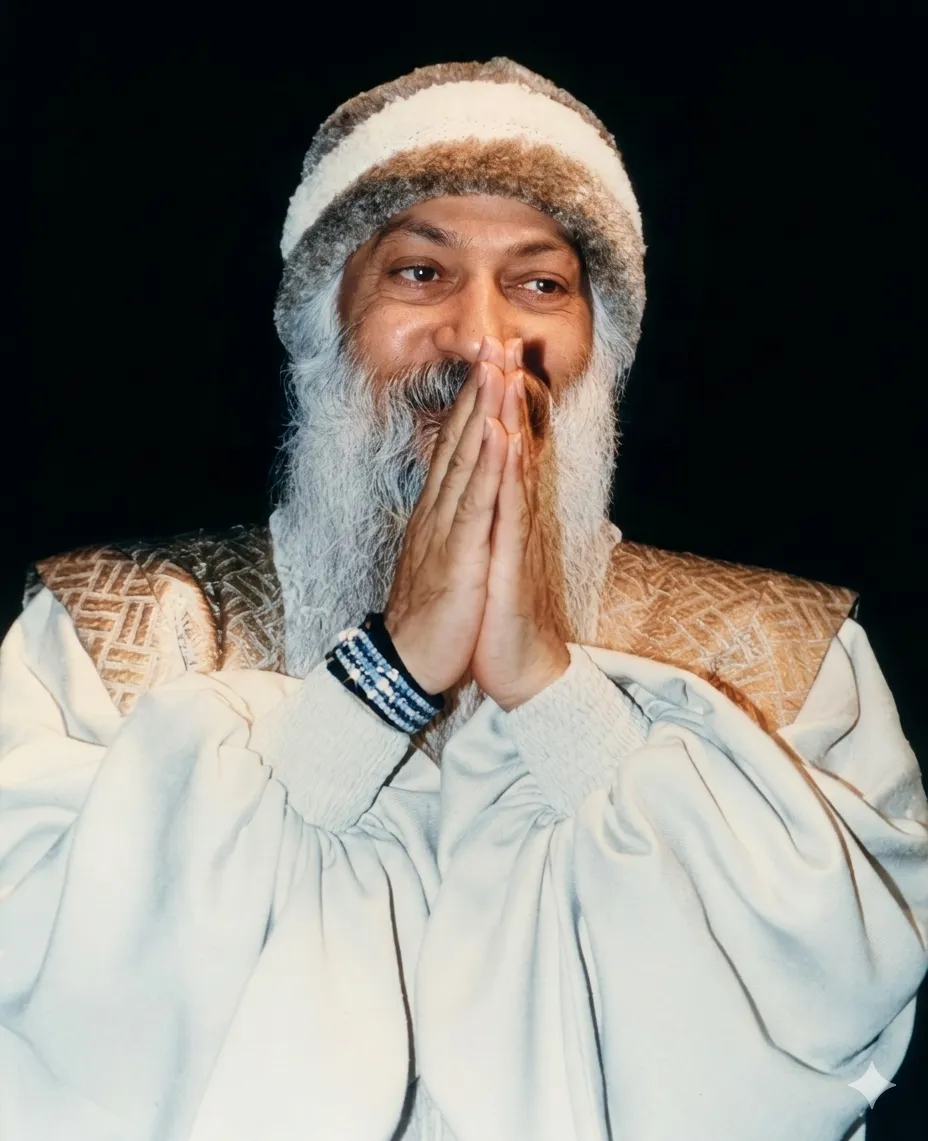
"From Personality to Individuality" is a profound exploration of the transition from socially constructed personas to the authentic essence of selfhood, as illuminated by Osho. In this transformative discourse series, Osho delves into the layers of consciousness that define human identity, drawing a clear distinction between the external personality imposed by societal norms and the intrinsic individuality that resides within each person. Osho critiques the superficial masks adopted in the pursuit of societal acceptance and success, advocating instead for an inner journey towards truth and self-awareness. He argues that true freedom and creativity stem from embracing one's individuality, which requires courage to look beyond the conditioned mind. Through these discourses, Osho provides insights into shedding the accumulated beliefs and behaviors that hinder personal growth. He encourages deep introspection and meditation as tools for dismantling the false self, fostering a direct experience of one's innate nature. This series is a call to embrace the internal silence and stillness where one's true potential and creativity flourish. With his characteristically challenging and compassionate approach, Osho guides listeners toward living a life of authenticity, spontaneity, and meaningful expression, beyond societal impositions and towards a vibrant, true individual existence.
-
Chapter 1: Man is born with a question mark in his heart
Man is born with a question mark; drop dogmatic answers - mysticism is living and tasting existence's mystery, not priestly mystifying with scriptures.
-
Chapter 2: To define is to confine -- existence has no boundaries
Meaning is irrelevant; life is neither meaningful nor meaningless — existence is boundless space for freedom and creativity, embracing aloneness as opportunity.
-
Chapter 3: Beware! I am here to destroy your dreams
Dreams of Christ, Krishna or a guru are mind-made substitutes for an inner hunger; abandon replicas, cut the dream, and awaken to your own authentic being.
-
Chapter 4: Jealousy: society's device to divide and rule
Jealousy is society's device of comparison that prevents aloneness and authenticity; abandon competition to reclaim your true, solitary individuality.
-
Chapter 5: Sannyas: the odyssey of aloneness -- a journey to the center of your being
Non-ascetic commune honors aloneness and individuality: a communion of rebellious spirits cultivating intelligence, meditation and non-binding relationships.
-
Chapter 6: Anxiety: Who are you? Anguish: Who am I?
Anguish is the deep existential question 'Who am I?' beyond everyday anxiety of choices; it burns away the mind's chatter, revealing pure witnessing.
-
Chapter 7: Conditioning: socially-sanctioned child abuse
Krishnamurti is enlightened but haunted by past conditioning—his revolt stays reactive, lacking the charismatic deconditioning and wholehearted freedom Osho deems essential.
-
Chapter 8: Rajneeshism: womb for transformation
An 'orthodox Rajneeshee' is a paradox: true sannyasins are unorthodox, living continuous rebellion against stale tradition, refusing dogma and dead revolutions.
-
Chapter 9: The law of karma: A conspiracy of the priests to manipulate your mind
Law of karma is priestly 'boo boo'—not a cosmic ledger but immediate psychological consequence: actions pay cash here and now, an aesthetic, not moral, law.
-
Chapter 10: Christianity: just a nice Jewish boy's hang-up
Christ was a Jewish messiah, not a 'Christian'; truth is immediate, not hierarchical — Osho refuses messiahhood or being a Rajneeshee and rejects labels.
-
Chapter 11: God -- the phantom fuehrer
God is a useless hypothesis; existence is self-sufficient, so humans must drop God, accept responsibility and transform life into conscious, loving action.
-
Chapter 12: Death: The ultimate orgasm
Death celebrated as an orgasm: living intensely dissolves fear; death is a change of house, not annihilation—fear arises from religions renouncing life.
-
Chapter 13: The new man: intellect in harmony with the heart
Soul's survival must be investigated, not believed; open the heart to trust first, then apply skeptical intellect—intelligence is intellect tuned to the heart.
-
Chapter 14: The only hope: the enlightenment of humanity
Used religious language as bait to find seekers, teaching a 'religionless' religion of human enlightenment, urging transformation of humanity within fifteen years.
-
Chapter 15: Truth said, truth dead
Preparing sannyasins for nothingness: to reclaim rebellion, deprogram religious and social conditioning, drop personality and find authentic inner truth.
-
Chapter 16: Superman: the fantasy for the inferior
Is the Superman like the New Man? No: Superman refines old ego—an inferiority projection (Nietzsche, Hitler, Aurobindo); New Man is ordinary humanity, a radical break.
-
Chapter 17: Holy Scriptures: wholly Bullshit
Madness and enlightenment are both 'out of the mind'—madness falls below by accident, enlightenment rises above by awareness; scriptures mislead—holy bullshit.
-
Chapter 18: The good shepherd -- the butcher's friend
Christianity's tight organization corrupts truth, sanctifies war and politics, exploits poverty and opposes birth control; Osho exposes its historic hypocrisy.
-
Chapter 19: Hell hath no fury like a Christian scorned
Belief-based religion cripples intelligence and closes the mind; Jesus' faith-first message attracts the fearful and angry, not open, reasoning individuals.
-
Chapter 20: Fear of hell, greed for heaven, the saviors soft sell
Saving others is impossible and insulting; compassion shares the way but never forces; one must save oneself, as the pond parable shows, preserving dignity.
-
Chapter 21: Priest and politicians: from genesis to genocide
Past masters were pygmies; religion built systems from fragments. Drop your stones, embrace ordinariness — truth is your birthright and not a mystic secret.
-
Chapter 22: Countdown to catastrophe: global suicide, or sannyas
Humanity faces global suicide unless a wholistic 'Zorba the Buddha' religion arises: an earthly, non‑dogmatic conscious force uniting saints and sinners.
-
Chapter 23: Bored to death? -- you're on the trail to transformation
Boredom signals intelligence and the crisis of meaning; embracing aloneness as a living flux—the child’s closed fist—turns boredom into creative transformation.
-
Chapter 24: Infallibility: just a popedream
Claims of papal infallibility are a popedream: authority and gods are human politics; godliness is a distributed life‑force, not personal infallibility.
-
Chapter 25: My day: the juice, the whole juice, and nothing but the juice
Raso vai saha: the 'juice'—pure taste beyond words—is the ultimate reality; Osho shows how music, plain food and naps open that inner taste.
-
Chapter 26: Only one sin -- to forget your being. Only one virtue -- to remember it
One sin: forgetting your being; one virtue: remembering it. Bliss is the ego's disappearance—an indefinable, transferable state awakened by presence. Here.
-
Chapter 27: Seek and ye shall miss; relax and ye shall find
The American idea of a 'pursuit of happiness' is wrong: seeking guarantees missing; relax, stop pursuing, and happiness appears as a by‑product when you let go.
-
Chapter 28: Knowledge is information; knowing is transformation
Knowledge is borrowed; knowing is a direct, transformative innocence—'I know that I know not' means awareness turned inward erases knower, known and knowledge.
-
Chapter 29: Belief -- just a blind man's bluff
Belief is blind — treat reincarnation as a hypothesis and investigate it through your own experience (hypnosis/rebirthing); distrust authority, seek truth.
-
Chapter 30: The only authentic democracy: the dictatorship of the enlightened ones
Why are you against communism? Because it equalizes poverty and negates individuality; real change needs commune-ism, equal opportunity, individuality and enlightened guidance.