
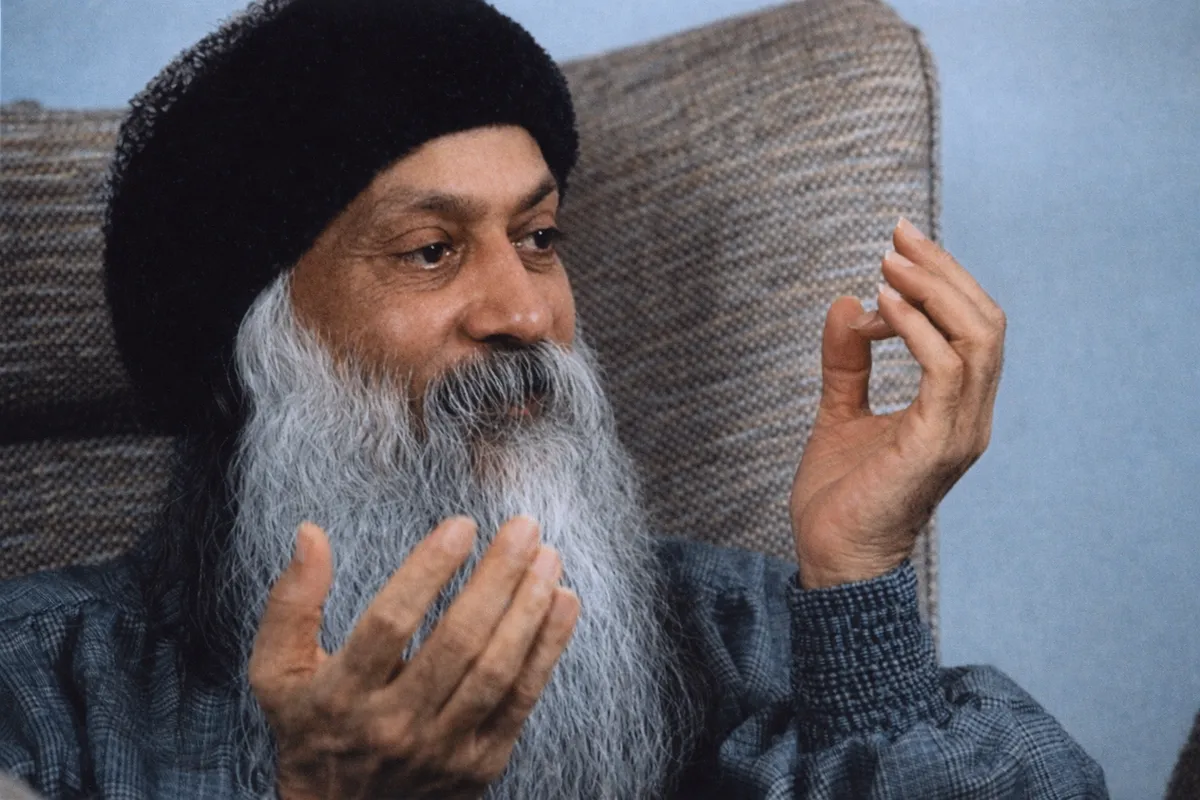
From Darkness to Light is a transformative discourse series where Osho guides seekers on a journey from ignorance to awareness, encouraging an exploration of the self beyond societal and psychological confines. Osho, with his unconventional wisdom, dissects the metaphor of light and darkness, symbolizing the transition from the subconscious shadows to an enlightened consciousness. This series emphasizes the profound distinction between mere intellectual understanding and experiential knowing, urging individuals to cultivate a direct connection with their inner truth. Osho challenges conventional beliefs, facilitating an inward journey where silence and meditation are pivotal tools for illumination. He explores the existential tension between the outer chaos and the inner tranquility, advocating for a harmonious balance that empowers individuals to live authentically. By intertwining humor and sharp insights, Osho dismantles the fear of the unknown, revealing that the ultimate light—true understanding—arises from embracing the full spectrum of human experience. From Darkness to Light ultimately serves as a beacon for those seeking genuine transformation, encouraging a fearless embrace of life's mysteries with openness and joy.
-
Chapter 1: Who says humanity needs saving?
Religions invent an 'original fall' to justify salvation; humanity outgrows dogma, and 'saving' others is often ego-driven escapism from one's own wounds.
-
Chapter 2: Innocence: the price you pay for the failure of success
Innocence is innate courage and crystal clarity; success and possessions build ego and corruption — reclaim childlike innocence to free yourself from the past.
-
Chapter 3: Help your child -- protect him from yourself!
Don't help your child; protect him from your conditioning. Love, nourish and guard him, remove dangers but grant freedom. Honor seven-year cycles.
-
Chapter 4: The death penalty: not punishment but revenge
The death penalty is revenge, not justice—an inhuman relic; criminals are sick, needing compassion and therapy, not execution, as wrongful sentences show.
-
Chapter 5: Successful criminals and cowardly politicians
Political and religious leaders share one will-to-power: politicians are successful criminals; priests are cowardly manipulators selling hollow promises.
-
Chapter 6: Every child's original face is the face of god
Every child's original face is the face of God: pure presence, alive and unconditioned; preserve it by non-doing, respect, freedom, not molding.
-
Chapter 7: Time is very short but my methods are very quick
Consciousness is always individual; you cannot raise the world's consciousness—raise your own through ruthless inner surgery. Time is short; quick fixes deceive.
-
Chapter 8: Agony is missing yourself, ecstasy is finding yourself
Agony is missing yourself, an inner chaos born of expectations; ecstasy is finding your center by facing that chaos and discovering your true self.
-
Chapter 9: Your suffering makes you special
Why is it so difficult to get rid of pain, misery, suffering? We become addicted—suffering gives identity; understanding dissolves it, while anguish is inner.
-
Chapter 10: Not spiritual guidance but spiritual presence
Spiritual growth needs presence, not rigid guidance: true masters transfer being through presence, silence and availability rather than rules or doctrine.
-
Chapter 11: Science and religion -- two petals of the same rose
Science and religion are distinct dimensions, outward and inward inquiry, not opposites to be synthesized but petals of one rose rooted in meditative oneness.
-
Chapter 12: A single humanity rejoicing
Religion isn't Eastern or Western; meditation and love are universal. True religiousness dissolves pseudo-religions and nations, leaving one humanity rejoicing.
-
Chapter 13: Truth is found in your own boutique
Organized religions are pseudo and must be kept from state power; true religion is an unorganized, herenow consciousness that can transform politics when mature.
-
Chapter 14: The best government is no government
No government is best: politicians feed on fear and war; replace nations with small democracies and a rotating global council to dissolve power.
-
Chapter 15: The sweet taste of corruption
Challenging faiths and 'Christianity' as fear-based, Osho defends 'corrupting' youth as clearing false beliefs to awaken inquiry and true consciousness.
-
Chapter 16: Till you live life totally
Life is its own goal: live fully in the present, drop future goals and religious postponements; only total living dissolves the hunger for eternal life.
-
Chapter 17: Love is a very unscientific idea
Science is a means limited to things; consciousness, love and being are beyond its method. Human values must guide science and life suffers deeply.
-
Chapter 18: Meditation: the door from slavery to freedom
Consciousness is absolute freedom beyond laws; matter obeys laws. Meditation opens the door from material slavery to inner spontaneity and unpredictable being.
-
Chapter 19: Where nothing is right and nothing is wrong
Right and wrong are social, contextual constructs; at the peak of awareness there is no right or wrong—being precedes doing, so actions arise from consciousness.
-
Chapter 20: Don't drop -- transform!
Clinging to misery is clinging to the ego: misery and the I are one. Understand and transform it - don't drop suffering; let its energy become bliss.
-
Chapter 21: I am a man who hopes against hope
Religious rebels must not become politicians; true religion is egoless let‑go that rebels against political stupidity, offering hope for a better world.
-
Chapter 22: Truth is here but you are not
Truth is your inner treasure; people ignore it because they've been conditioned to seek outward containers and avoid the personal inquiry for remembrance.
-
Chapter 23: Our way is of humour our way is of bliss
Fear and failure make outsiders attack a joyous commune; their hatred proves the new way—humour, love and bliss—threaten their history and comfort.
-
Chapter 24: The third alternative: the whole man
Repressing sex redirects life-energy into culture, wealth while killing joy; the third way is to expand energy through meditation to be Zorba and Buddha.
-
Chapter 25: The bell always tolls for somebody else
We unconsciously believe death happens to others; certainty is a fallacy. Live intensely and present so death becomes a brief, welcome transition, not a terror.
-
Chapter 26: The enlightened and the endarkened
The lesser cannot recognize the higher: religious leaders oppose true masters; like the frog-in-the-well parable, seekers must be shown the ocean, not convinced.
-
Chapter 27: This time it can be one earth
East's ancient abundance fostered religion and inner sciences; the West's harsh struggle birthed outward, destructive science — now both must become one earth.
-
Chapter 28: Either politicians remain or humanity remains
Do politicians have brains? Osho says no: politics foments stupidity, war and wasted history; humanity must reject politics and awaken religious consciousness.
-
Chapter 29: History repeats itself, unfortunately
Law of mediocrity: affluence spawns renunciants who condemn wealth, shrinking civilizations; Christianity helped Rome fall and now imperils America.
-
Chapter 30: Does a flower need religion?
A natural pagan needs no religion: living fully is itself religion. Like a flower that blossoms, religion is a gift from fulfilled life, not a remedy.