
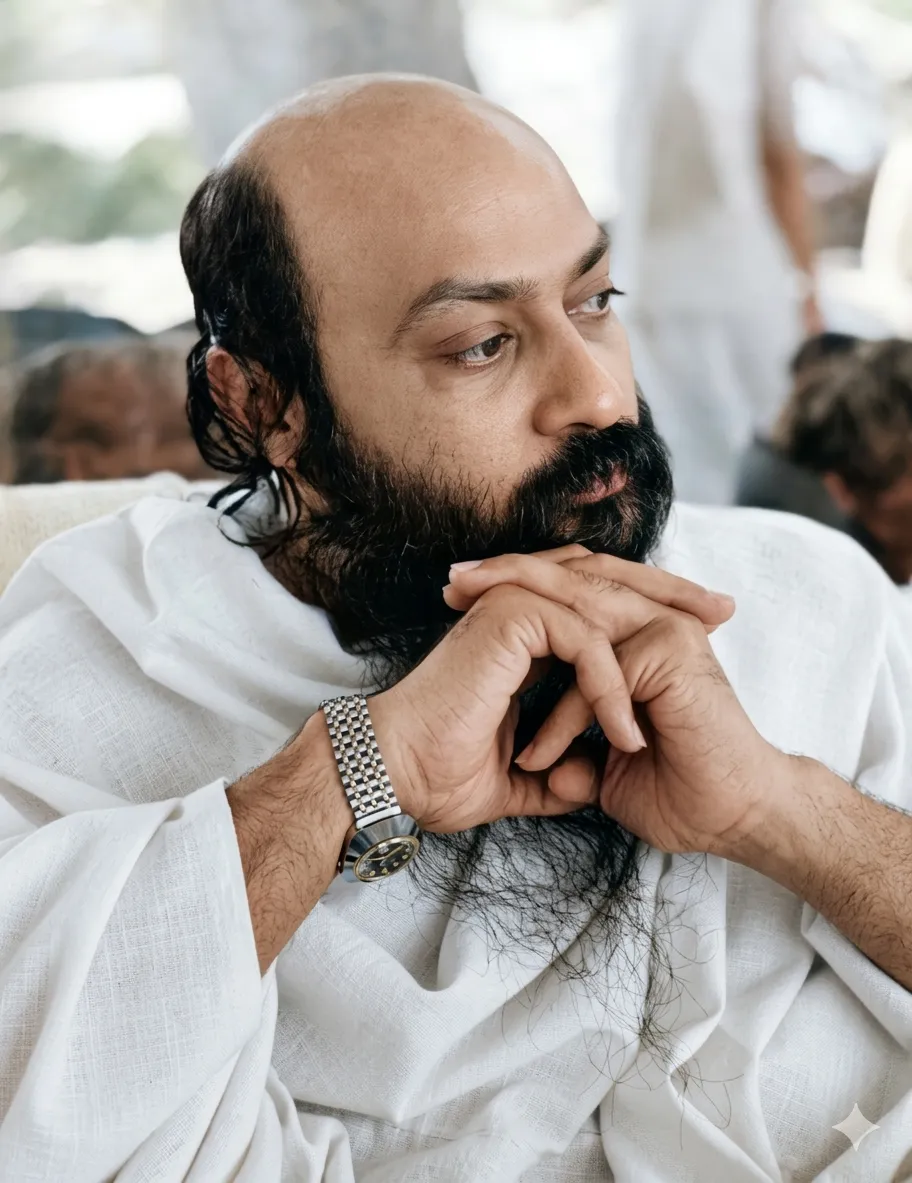
From Bondage to Freedom is a profound exploration of the human quest for liberation, offering a gateway to understanding the intricate tapestry of spiritual enlightenment. Osho delves into the innate human condition of bondage—bondage that is of our own making, as we are often shackled by societal norms, personal desires, and mental constructs. With his trademark clarity and incisive intellect, Osho peels back the layers of illusion that obscure our true selves. He provokes a radical inquiry into the nature of freedom, urging a deep introspection that challenges conventional wisdom. The series emphasizes the significance of self-awareness as the foundation of true liberation. Osho articulates that freedom is not a distant goal to be achieved but a state of being to be realized in the present moment. He unravels the paradox of how surrendering the ego's rigidity and embracing a life of awareness and mindfulness can lead to a profound sense of freedom. This discourse invites listeners to embark on a transformative journey from the self-imposed limitations of bondage to the unbounded realms of spiritual freedom, guided by Osho's revolutionary insights that blend Eastern wisdom with a fresh, modern perspective.
-
Chapter 1: To be ordinary is the most extraordinary thing in the world
Accepting ordinary simplicity frees you from ego, mediocrity and false specialness; humility becomes real grace, and concentration differs from meditation.
-
Chapter 2: The work of the serpent
Sheela’s betrayal exposed; Osho celebrates the serpent as revolutionary who brought knowledge—disobedience and awareness free humanity from oppressive obedience.
-
Chapter 3: Learn from this experience
Love's fragility can be exploited, yet its life giving strength outlives destructive power; power reveals hidden shadow, so cultivate awareness and independence.
-
Chapter 4: Where do we go from here?
After Sheela's escape sannyas face freedom's burden: Osho urges responsibility over paranoia, love and forgiveness to transform the guilty and save the commune.
-
Chapter 5: The future is open
Meditative people cannot be corrupted; power reveals hidden motives—Sheela's betrayal shows the future remains open and responsibility, confession and love heal what punishment cannot.
-
Chapter 6: The meaning of responsibility
Take responsibility, not blind surrender: dependency on father-figures created the fascism in the commune; awaken, act with clarity, ownership and love.
-
Chapter 7: Love is not surrender
Light and darkness are complements: transcend opposites by becoming a witness. Love is not surrender but unconditional giving; compassion replaces conditional love.
-
Chapter 8: Intelligence is a luxury
Christianity and Hinduism have perverted sex; celibacy breeds hypocrisy and illness, tantra makes orgasm a path to meditation, freeing one from dependence.
-
Chapter 9: Intelligence is a luxury
Anger reveals immature love; responsibility, doubt and shedding dogma free you from fascist obedience — truth is lived, not believed or spoken.
-
Chapter 10: Struggling for the new man
Humanity remains mentally immature; true liberation demands inner evolution and meditation, rejecting politicians and priests to create a conscious humanity.
-
Chapter 11: The dewdrop has disappeared into the ocean
Master is pure presence; disciples drown ego into existence. Love and life, not celibacy, fuel true meditation; cure power-hunger by honoring individuality.
-
Chapter 12: Today we claim the rainbow
Betrayal reveals self-betrayal; Sheela’s treachery contrasted with unconditional love—freedom from 'isms', reclaiming color, returning malas, and silence.
-
Chapter 13: The world needs to be one
Zorba the Buddha merges Zorba (body) and Buddha (spirit), healing the split in individuals and society; silent, individual rebellion exposed Sheela's betrayal.
-
Chapter 14: No master, no disciple
Women lead from the heart; communes foster individual freedom and love as a state, not possession; there is no master and no disciple, only friends.
-
Chapter 15: Now meditation is needed even more
Meditation must deepen: be apolitical and nonviolent, awaken to inner clarity, stop projecting onto the master, and become independently responsible.
-
Chapter 16: This existence is paradise
Anger at others for not embracing sannyas reveals insecurity; truth needs no conversion—freedom, rebellion and inner awakening make this existence paradise.
-
Chapter 17: You just need a little courage
Face oppression with courage, burn dead religion and keep religiousness alive: meditate (witnessing), be an individual within a supportive commune.
-
Chapter 18: Existential worship
Make every action worship by losing the ego in creative loving; reject ritualized religion and hypnosis—meditation is alert, awakening union with existence.
-
Chapter 19: A mystic versus America
Rajneesh Mandir stays by direct democratic choice; organized religion must die so individuals can awaken through meditation, inner inquiry, and true freedom.
-
Chapter 20: The power of the mystic
True power is inner — the mystic's compassionate presence; defend the commune with responsible practicality, balancing freedom, creativity and security.
-
Chapter 21: Your work should be your joy
A mystic commune is a 'religio'—inner healing and mystery; choose discipline as self-responsibility, make work your joy, and protest with silent meditation.
-
Chapter 22: This whole earth belongs to us
Freedom is inner: betrayal hurts only yourself; enlightenment is here-and-now, not a future reward; be present and meditation will arise now.
-
Chapter 23: Religion is dead, religio is born
God and organized religion are dead; their death frees the individual to discover religio — inner, experiential unity, responsibility, and meditation.
-
Chapter 24: Learn the art of living
Love blooms from inner silence and rejoicing, not from despair; cultivate inner paradise, drop ego, and live fully to radiate love, contradicting Gibran.
-
Chapter 25: The buddhafield remains
Innocence is unburdened openness; stupidity is amassed knowledge without inner knowing. Freedom requires self-discipline, the buddhafield remains.
-
Chapter 26: Truth is enough unto itself
Truth needs no defense; embody it rather than argue—let presence convey transformation; show friends your inner change and invite them to come.
-
Chapter 27: Close your eyes and find me
Sheela betrayed herself, not the Master; love endures despite crimes. Statements about truth change with the audience; enlightenment is inner freedom.
-
Chapter 28: You are eternal
Power is inner radiance and love's blessing, not violence; force is interference—meditation makes you whole, indestructible, and shares your light.
-
Chapter 29: Truth -- not a highway but a hill track
God and organized religion are fictions; truth must be discovered individually on a hill-track, not followed. Drop beliefs and ego; seek, don't inherit.
-
Chapter 30: This beautiful earth
Oaths and punitive courts perpetuate lies; reward truth and inner transformation through meditation to save this beautiful earth from global suicide.
-
Chapter 31: Democracy means mediocracy
Inferiority breeds the need to prove oneself; celebrate each person's uniqueness instead of enforced equality, dismantle mediocracy and institute meritocracy.
-
Chapter 32: The great accident
Priests, lawyers and institutions are needless mediators; enlightenment cannot be forced but arises accidentally when a catalytic silence and purity ripen.
-
Chapter 33: Dismantle the ego
Empathy reconnects us to life and must replace mind-driven living; dismantle the ego by 'beheading' the mind so the heart regains its luminous, connected being.
-
Chapter 34: The sound of truth: "Aha!"
Choose questions that free the mind; drop beliefs and esoteric illusions, undo harms rather than confess guilt, and let truth dawn naturally as an 'Aha!'
-
Chapter 35: Existence is only in the present
Fear of the commune's future dissolves when one lives here-and-now: existence exists only in the present, so be present and the transformation endures.
-
Chapter 36: To each his own song
Socratic therapy revives inner discovery and psychosynthesis, restoring wholeness by honoring individuality, body and spirit so one can find his own song
-
Chapter 37: Doubt is absolutely okay
Rebellion is inner, nonviolent creation, not violent revolution; doubt, not borrowed belief, is the nectar of inquiry—yes, doubt is absolutely okay.
-
Chapter 38: Enough just to be with me
Beyond psychotherapy is your real being: meditation and witnessing silence the mind, revealing choiceless clarity, true health and honest perception.
-
Chapter 39: Every child is born a witness
Meditation or no-mind births authentic love, dance, music and art; witnessing dissolves the mind into pure presence—every child is born a witness, rediscover it.
-
Chapter 40: Without Zorba there is no Buddha
Meeting of Zorba and Buddha is possible: live the body fully (Zorba) and it becomes the root for inner awakening (Buddha); religions that split block unity.
-
Chapter 41: The psychology of the buddhas
Mind is seven‑storied: transcend from unconscious to cosmic consciousness through witnessing meditation so artists needn't fall into madness and humans can become whole.
-
Chapter 42: Everything beautiful is absurd
Reject leaders; a guide deprograms you to discover freedom. Beauty and joy are intrinsically absurd—accept them without meaning; doubt allowed.
-
Chapter 43: The blessed ones
Only a buddha - a no-mind beyond mind - can see mind objectively; psychology from the awakened summit reveals full truth beyond fragmentary theories.