
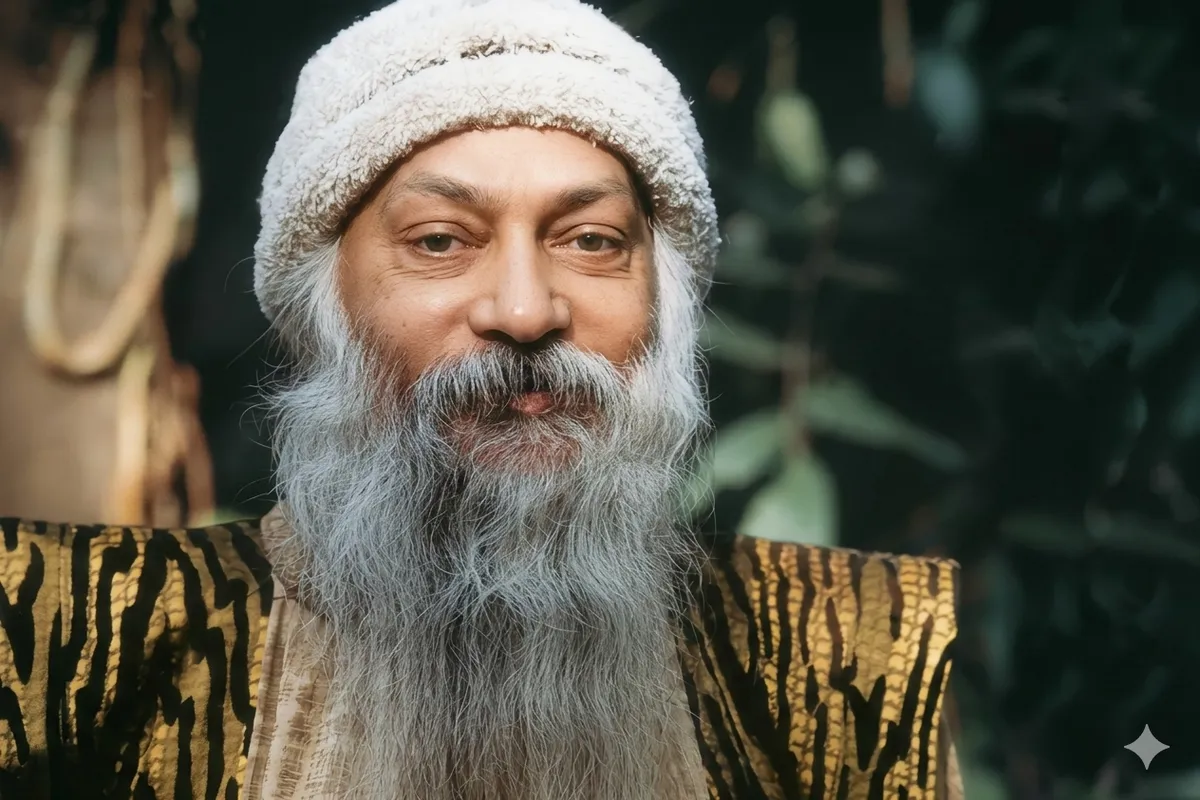
"Bodhidharma: The Greatest Zen Master" by Osho delves into the enigmatic and profound teachings of Bodhidharma, a seminal figure in Zen Buddhism. Osho vividly brings to life Bodhidharma's uncompromising pursuit of truth and his revolutionary approach to spiritual awakening, which emphasizes direct experience over doctrinal adherence. Throughout the series, Osho explores the themes of inner emptiness, meditation, and the transcendence of duality. He emphasizes the radical simplicity and raw authenticity that epitomize Zen, encouraging seekers to dismantle societal constructs and self-imposed limitations to connect with their pure, original nature. Osho’s discourses illuminate Bodhidharma’s insistence on self-reliance and intuition as paths to enlightenment, fostering a perspective that truth cannot be taught but must be realized individually. Interweaving humor with profound insights, Osho challenges conventional thought, inviting his audience to explore Zen in everyday life and to embrace the chaos and uncertainty inherent in the journey of self-discovery. The series portrays Zen as both a destructive and a creative force, one that breaks down false identities to reveal the timeless essence within each person. Through his unique perspective, Osho renders Bodhidharma's teachings accessible to contemporary seekers, highlighting the transformative potential of awakening to one's true self.
-
Chapter 1: To seek nothing is bliss
Non-seeking is supreme bliss: Osho parses Bodhidharma's four practices, favors meditation and immediate presence over scholastic reason, exposing interpolations.
-
Chapter 2: A pilgrimage to your own being
True buddhahood is no-mind: enlightenment is your innate, self-luminous witness beyond thought; to seek a Buddha outside your own being is futile.
-
Chapter 3: Beyond this nature there's no Buddha
If you don't understand by yourself, find a master—seeing your nature is the Buddha; scriptures and learning can't replace direct awareness of deathless being.
-
Chapter 4: Buddhas don't practice nonsense
Enlightenment isn't earned by rituals or good deeds but discovered by seeing true nature; sutra notes mix disciples' confusion with Bodhidharma.
-
Chapter 5: Suchness is our self-nature
People are deluded because they don't see their self-nature; suchness (tathata) — the no‑mind — is already present; wake, stop worshiping appearances.
-
Chapter 6: Understanding comes in mid-sentence
Worship misdirected—you're already Buddha. Transcend appearances and mind to meet no‑mind; scriptures are prose, understanding arrives in mid‑sentence.
-
Chapter 7: Get ready and claim your inheritance
Transcend duality: awaken to undivided self, act without acting, end karma, and transform life—Bodhidharma’s path to freedom in fortune and loss.
-
Chapter 8: Everybody has the right to be wrong
True enlightenment is seeing your nature: habits, roles or karma cannot touch the pure self; paths and compassion differ, yet everyone has the right to be wrong.
-
Chapter 9: Dead men don't bleed
Detachment frees from greed, anger, delusion; enlightenment brings clarity but not infallibility—Bodhidharma’s way is no‑mind, freedom from appearances.
-
Chapter 10: Not to be in the mind is everything
Freedom lies in dropping the mind: true reality is known not by thought but by no-mind, silent awareness; transcend projections to reach the other shore.
-
Chapter 11: Mind is the greatest enemy of man
Mind is man's greatest enemy: drop borrowed knowledge, act beyond thinking, awaken through samadhi so reality becomes lived wisdom and rebirth ends.
-
Chapter 12: Every suffering is a Buddha-seed
Mind is prison; no-mind is nirvana - suffering seeds the search that ripens into Buddhahood; speech and silence become Dharma when rooted in awareness.
-
Chapter 13: Mind is the bondage
Buddhahood springs from mind yet transcends it: the mind is both source and bondage; like lotus from mud, awakening is a degree‑shift into no‑mind.
-
Chapter 14: To face a Buddha is dangerous
Facing a living Buddha is dangerous: true awakening dissolves all bodies and ego; individuals create karma but can respond, not react, to become free.
-
Chapter 15: Breakthrough... to buddhahood
Behold the mind: awareness cuts the root of mind's illusions, producing a breakthrough to buddhahood; unlike breakdown, it transcends mind into sanity.
-
Chapter 16: The courage to say "i don't know"
The courage to say 'I don't know' is the only honest response to the ultimate question—where does ignorance originate—life remains a mystery to be lived.
-
Chapter 17: Take the risk wholesale
Liberation is sudden awareness, not endless disciplines: behold the mind, overcome the three poisons and risk dropping the ego wholesale rather than piecemeal compromise.
-
Chapter 18: Wakefulness is awareness
Wakefulness is awareness: enlightenment transcends the purified mind and rituals; Osho criticizes Bodhidharma's 'dharmamilk' myths and insists on no-mind.
-
Chapter 19: Relish the mystery in the depths of your heart
Relish the ultimate mystery: it's not an answer to be given but a silence to be lived; external rituals without inner awareness are empty and misleading.
-
Chapter 20: Less than an eyeblink away
Beholding the mind, not external rituals, is true merit; Bodhidharma's literalism is exposed and no-mind meditation offers immediate realization now.