
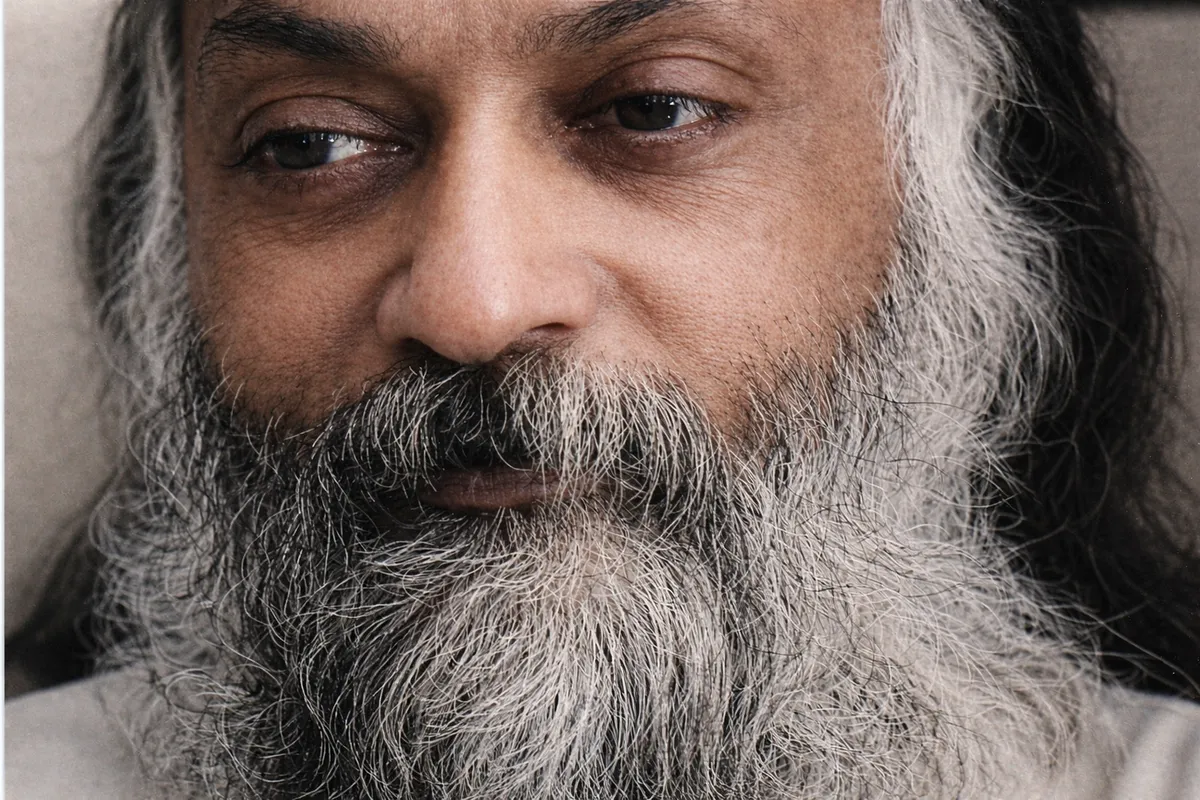
"Bhaj Govindam" is a profound exploration of the nuanced dynamics inherent in human attachment and renunciation. In this discourse series, Osho delves into the teachings of Shankar, revealing the subtle pitfalls of swinging from one extreme to another—be it from indulgence to asceticism or attachment to renunciation. Osho emphasizes that true spiritual growth arises not from the renunciation of worldly attachments for the sake of it, but from a genuine understanding of their futility. He warns against the common tendency to replace one form of attachment with another, merely cloaked in the guise of renunciation. Instead, he advocates for a dissolution of attachment that naturally unfolds into a state of freedom, without forcibly adopting a renunciatory stance. Through his eloquent interpretation, Osho invites seekers to transcend the duality of attachment and renunciation, illustrating that real spiritual liberation is found in a balanced state of awareness and acceptance. This series is an invitation to look beyond surface-level understanding and explore the deeper essence of non-attachment, where renunciation is a spontaneous by-product of inner clarity and contentment.
-
Chapter 1
Silence and emptiness reveal truth; words and hoarding blind the heart—sing Govinda, renounce punditry and possessions, invite the Divine before death.
-
Chapter 2
Knowledge clears the soil and devotion plants the seed: intellect and heart must unite so surrender, ripeness and true freedom arise beyond transient pleasure.
-
Chapter 3
Drop attachment, not by replacing it with renunciation, but by awakening to the middle path; cultivate inner solitude, sing Govind, and live free now.
-
Chapter 4
Sects are doors—Shankara and Buddha reveal one truth: drop the self, sing 'Bhaj Govindam' to uproot foolishness, dig through karma to the inner water of being.
-
Chapter 5
Freedom lets us choose heaven or earth; attachment to fleeting pleasures blocks the Divine - empty hands and broken hope allow true knowing and samadhi.
-
Chapter 6
Shankara used disputation not to prove but to shatter pedantry—logic clears the ground so the heart can enter; truth lies beyond argument, in devotion.
-
Chapter 7
Liberation comes from inner understanding, not from piling up scriptures; one true drop of insight dissolves death, awakens simplicity and oneness.
-
Chapter 8
Recognition of death frees attachment: true renunciation is inner dying; sannyas awakens one beyond mother, name and form into timeless nectar.
-
Chapter 9
Ego's echoes bind us: abandon lust, anger, greed and attachment, sing Govinda and withdraw inward to realize moksha — inner freedom beyond possessions and fear.
-
Chapter 10
Pranayama and pratyahara—outward expansion and inward return—mirror creation and dissolution; watch desires awake, not repress, and dreams dissolve into God.