
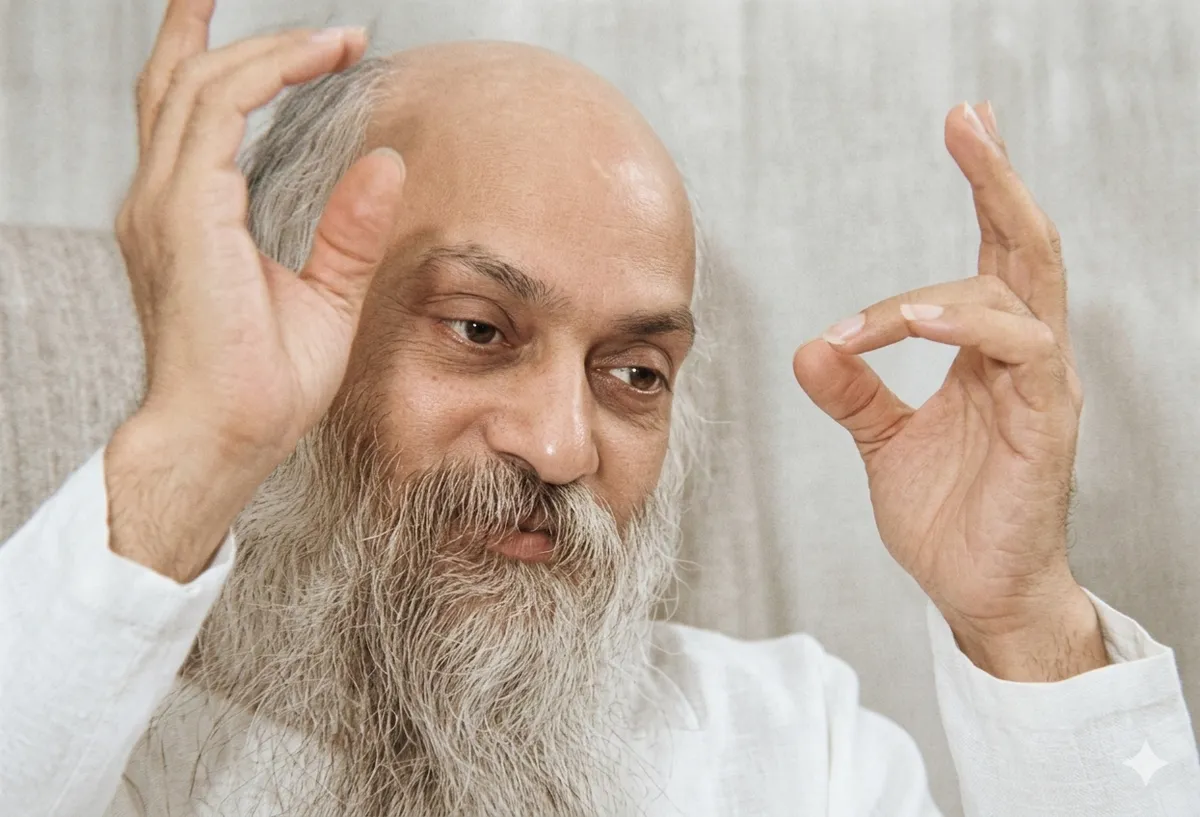
"Beyond Psychology" invites readers on a transformative exploration into the depths of the human psyche, through the insightful and provocative lens of Osho. This discourse series challenges traditional psychological frameworks by peeling back the layers of societal conditioning and probing the essence of what it means to be human. Osho navigates through the intricacies of mind, consciousness, and being, urging individuals to transcend the limitations of psychological constructs and venture into a state of pure awareness. At the heart of Osho's teachings is the notion that true understanding and liberation cannot be attained within the confines of the mind alone. He emphasizes the importance of mindfulness, meditation, and the dismantling of ego-driven narratives that obscure one's authentic self. "Beyond Psychology" delves into the art of unlearning - shedding inherited beliefs and biases to embrace an existence anchored in the present moment. With candor and wit, Osho illuminates pathways to inner freedom, urging a departure from fear-based living toward one rooted in love, spontaneity, and spiritual awakening. This dynamic series stands as a testament to Osho's revolutionary approach to the intersection of psychology and spirituality, offering timeless insights into achieving a profound harmony within.
-
Chapter 1: Truth is the greatest offender
Truth offends; the world has forgotten itself — you haven't. Their hostility reveals wounded identities. Remain compassionate, patient and unwavering.
-
Chapter 2: Your mind is the judas
Mind is the Judas: dissolve the false ego to merge with existence while first finding your indivisible individuality; the heart knows, not the mind.
-
Chapter 3: Just counting other people's cows
Religious leaders teach borrowed knowledge that keeps people asleep; truth must be lived, not memorized. Take responsibility, drop false knowledge and awaken.
-
Chapter 4: Dancingly, disappear
The urge to 'disappear' in deep relaxation is spiritual liberation, not suicide; drop the ego, laugh, and dancingly melt into existence.
-
Chapter 5: You have to go nowhere
Clinging to the known is clinging to a corpse; drop the dead past and be born anew. Courage is clarity; be yourself, not a follower, and let life arise.
-
Chapter 6: A lot -- and nothing
Outer turmoil reveals humanity's stagnation and civic barbarism; the inner being remains untouched. Paths differ—total surrender or total fight—both transform.
-
Chapter 7: Empty from birth to death
Bureaucracy exploits and fears joyous people; liberation comes when hearts open to simple love and communal sharing, beyond mind's complications.
-
Chapter 8: The head is compulsory, but not the cap
Choose intelligent disobedience: respond with responsibility rather than reactive obedience; judge orders, act with love and no anger, and live existentially.
-
Chapter 9: I want to provoke your jealousy
Provoke jealousy to expose repressed desire: reject ascetic poverty, celebrate abundance as bridge between body and spirit so self-love and true love can arise.
-
Chapter 10: The ostrich argument
Good and evil are relative; governments hide in ostrich fear, clinging to a dead past while truth can awaken youth and offer an alternative to decay.
-
Chapter 11: It is pure light... pure delight
Natural death is earned by living fully and naturally; drop the ego's striving, let existence unfold, and dying becomes pure light, pure delight.
-
Chapter 12: Obedience needs no art
Vision of the new man shifts you from past to present - seeing it changes you now. Obedience needs no art; disobedience is a creative, intelligent act.
-
Chapter 13: Christianity is an empty box
Christianity is an empty box: Jesus escaped death and lived in Kashmir; Christianity's miracles, God and doctrines are dying — drop belief, arrive at trust.
-
Chapter 14: Let it soak within your heart
Let-go is absence of fight, not defeat; relinquish ego and flow with existence (Majnu parable). Authenticity, naturalness and transformation are possible.
-
Chapter 15: I have kept my wondering eyes alive
Children are not possessions; parents must give freedom so originality can grow. Guilt dissolves when children meet truth, responsibility and love.
-
Chapter 16: Emptiness has its own fullness
No separate self exists; emptiness is full of wholeness—dissolve the ego into the universal, relax and trust existence, and avoid fixed images of the teacher.
-
Chapter 17: The world is where the work is
Be in the world as a mystery school: refresh in presence, then return to transform suffering with joy and courage — the world is where the work is.
-
Chapter 18: Terrorism is in your unconscious
Terrorism is the unconscious hunter: social breakdown, religions poisoning joy, and built-up rage make violence personal unless deep inner change occurs.
-
Chapter 19: Step aside, let the mind pass
You are not the mind; step aside, witness thoughts and fears, let the mind pass - acceptance frees awareness and reveals the mind's death and rebirth.
-
Chapter 20: It is all happening silently
Calm, silent presence endures beyond fleeting ecstasy; the master’s mere being catalyzes inner flowering. Cherish sustained quiet as the path to transcendence
-
Chapter 21: The most blissful moment -- when you cannot find yourself
Drop the mind and let words become silence; true communion arises when you stop seeking to be understood or loved, and lose yourself in pure presence.
-
Chapter 22: Freedom doesn't choose, it discovers
Be yourself means pure watchful awareness: freedom is choiceless discovery and let-go, not a decision; awareness ends mind's indecision and reveals truth.
-
Chapter 23: Trees grow without being taught
Parents should nourish freedom, not program children; allow mistakes, guard negatively, teach skills (tie a rope) and let each follow inner potential to become themselves.
-
Chapter 24: Whenever the ego gains, you are the loser
Ego gains cost true growth: Osho urges discipleship over friendship, exposes commune resentment and greed, and teaches remembering authentic inner truth.
-
Chapter 25: We cannot be otherwise
Depth of love, not years, opens the obvious; meditation silences the chatterbox mind so the timeless oneness — we cannot be otherwise — is realized.
-
Chapter 26: The circle can be broken
Confront priests and politicians to break the conditioning circle; greed is inner emptiness healed by union with life; the master too must be transcended.
-
Chapter 27: So which way are you moving
Every moment either brings you closer to inner explosion or deeper into darkness; choose availability to existence over accidental ‘doing your own thing’.
-
Chapter 28: Going just with his flute and a bottle of wine
Value lies in depth of awakening: feed one truly awake soul rather than millions asleep; the last stage transcends enlightenment into ordinary freedom.
-
Chapter 29: Come a little closer
Trust without expectation: love and teaching are shared as joy, not work; come a little closer to dissolve into one light with the master and be reborn.
-
Chapter 30: New bottles for the old wine
Pythagoras’ three P’s—preparation, purification, perfection—frame an alchemical path: shed conditioning, transmute instincts into love, and awaken uniquely.
-
Chapter 31: The courage to be ignorant
Courage to be ignorant: refuse society's borrowed answers; remain innocent, live the moment, and let direct inner discovery reveal the truth.
-
Chapter 32: Life consists of small things
Creative fulfillment must be intrinsic: love your work, not its applause; seek trust over possessive love; small deeds hold life’s meaning deeply.
-
Chapter 33: Prayer -- your psychological armor
Psychological armor—prayers, gods, rituals—are childhood fear. See and drop them; live fearlessly, moment to moment. Maturity is total openness.
-
Chapter 34: Rocks, the earth... they are all alive
Hypnosis unlocks layers of mind — unconscious, collective and cosmic — revealing past lives and that trees, rocks and sacred places retain living impressions.
-
Chapter 35: Falling above the mind
Madness is either falling below the mind or rising above it into superconsciousness; truth is found in inner silence as subjectivity - Ramakrishna's paramhansa.
-
Chapter 36: Wake up and you are it
Awakening is immediate—turiya lies beside waking; techniques and beliefs are devices to be used then dropped; individuality awakens when personality falls.
-
Chapter 37: Each moment is insecure
Life is inherently insecure; opportunistic therapists may mimic gurus, but only inner awakening-not surface therapy-lets you use each uncertain moment fully.
-
Chapter 38: A world beyond time
Letting go of ego and power opens a world beyond time: silence and meditation free creativity, reveal power's guilty violence, and avert self‑destruction.
-
Chapter 39: Your mind is not yours
Your mind is not yours - society implants a borrowed mind; witness and drop it to go beyond mind, regain authentic freedom and religious experience.
-
Chapter 40: The body does not have beliefs
Mind conditions the body: dehypnotize before hypnosis—otherwise repressed horrors erupt. Untrained therapists can harm; true work awakens, not traumatizes.
-
Chapter 41: Times of crisis are just golden
Social crises dissolve the mind's social roots, driving some into madness while offering the courageous a golden chance to slip beyond the mind into freedom.
-
Chapter 42: Everybody is enough
Feeling unworthy can be a blessing: it dissolves the ego and leads beyond worthiness to true individuality and enoughness, and awakens you from social programs.
-
Chapter 43: Logic should serve love
Illusions color desire; learn to laugh at your projections. Let logic serve love—truth is that which works, and masters use 'beautiful lies' to awaken you.
-
Chapter 44: Watchfulness is the greatest magic
Watchfulness dissolves dreams: train the half-awake intention to remember dreams, use hypnosis and trust to bring unconscious into consciousness and be reborn.