
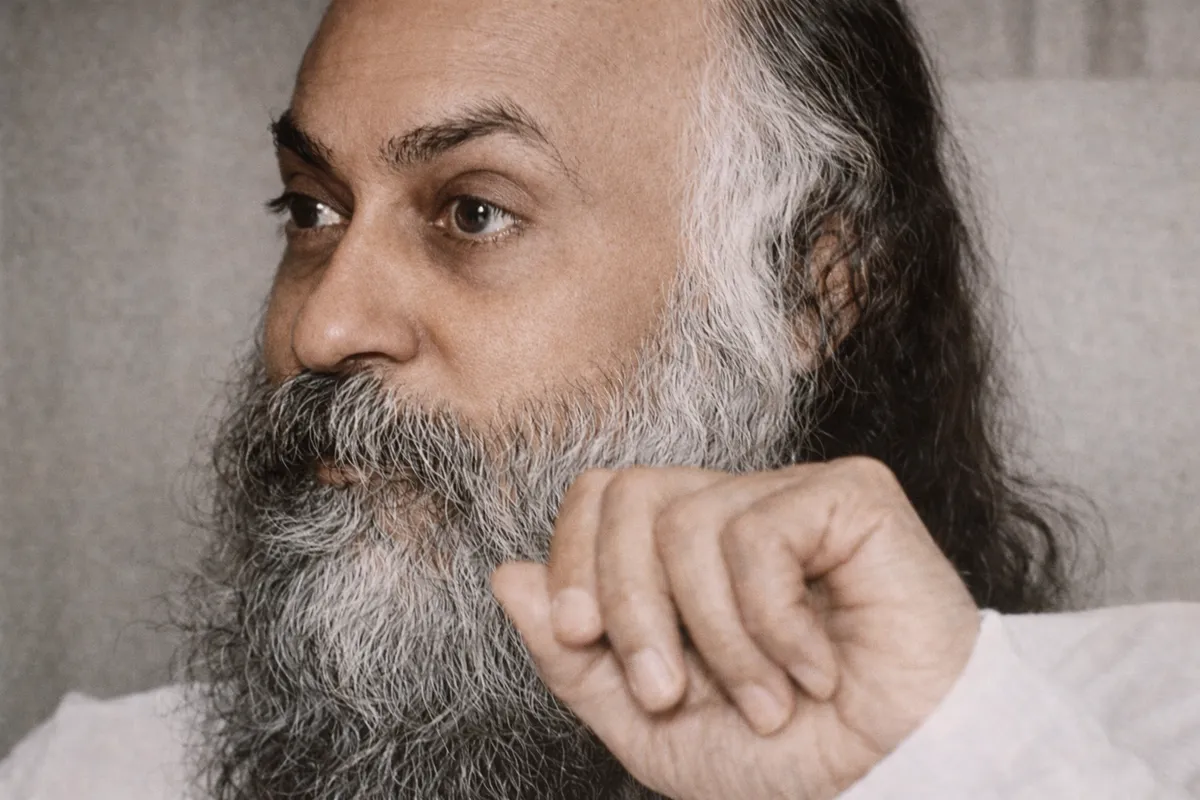
"Adhyatam Upanishad" is a profound discourse series by Osho exploring the essence of spiritual liberation. Central to these teachings is the radical notion that bondage is self-imposed, and true freedom lies within our grasp, not as something to be achieved, but as the intrinsic nature of our being. Osho challenges conventional perceptions of suffering and attachment by asserting that it is not the ego, the world, or the cycle of births that ensnares us; rather, it is our own persistent clinging and self-indulgence. He invites a paradigm shift from the futile quest to escape suffering, to a deep introspection of the mechanisms by which we hold onto it. Liberation, according to Osho, is not an external acquisition but an inherent state beneath the veils of our attachments. By relinquishing these attachments, we naturally return to our liberated selves. Through this discourse, Osho offers a transformative understanding that redirects the seeker from external pursuits to internal liberation, unveiling the subtle intricacies of the ego and the self within the fabric of existence. His insights encourage a detachment not through resistance, but through awareness and the profound realization of our own complicity in our perceived captivity.
-
Chapter 1
Knowledge must be lived, not memorized: stake your whole being, risk everything to become the flower rather than only glimpse it—can you be divine?
-
Chapter 2
Lost ourselves because the Divine is too near: the nearest hides; desirelessness and abiding in Brahman dispel adhyasa and reveal the inner Self.
-
Chapter 3
Freedom arises by abandoning 'mine'—body, mind, scriptures and even the soul; resting as the witness, one asks, who am I when all possessions dissolve?
-
Chapter 4
See the body's filth from within, turn your face from its pull, and merge the inner mirror with the vast sky - only then peace and Brahman arise.
-
Chapter 5
Freedom isn't acquired; it arises when you drop the self‑made clutch of ego. Ask how you cling, not how to escape, and find the Self.
-
Chapter 6
Life is the only chance for liberation: drop all choices and dualities, abide as the witnessing self, and die awake into kaivalya—choicelessness frees you.
-
Chapter 7
See the world as your mind's imputation - knots on a handkerchief; witness the mind and the snake-like world dissolves into nondual, actionless Brahman.
-
Chapter 8
Mind (chitta) is a changing flow; one-pointed focus dissolves it, revealing timeless consciousness. Dispassion yields knowing, repose and inner peace.
-
Chapter 9
God is 'That'—impersonal, formless; true meeting requires dissolving the 'I' so maya/avidya fall away, reached by either dissolution or total acceptance
-
Chapter 10
Fourfold path - shravan, manana, nididhyasana, samadhi - from deep listening and reflection to one-pointed living and absorption: realize 'Tat Tvam Asi'.
-
Chapter 11
Samadhi dissolves the mind so experience is ungraspable; upon return bliss is inferred, karmas are cut and one's true nature rains down as dharma‑cloud.
-
Chapter 12
Vairagya is absence of desire even when objects are present; supreme knowledge is absence of ego. Witnessing dissolves vrittis and yields lasting bliss.
-
Chapter 13
A jivanmukta sees death as present, lives as a witness beyond the intellect, experiences nonduality and true equanimity; karmic pain endures and cannot be transferred.
-
Chapter 14
Mind is a mechanical recorder; samadhi is one but minds translate it. The Self is sky-like—untouched by past or future karma, yet karma still runs.
-
Chapter 15
Karma binds only when consciousness identifies with the body; drop the 'mine' and prarabdha falls away, decide and transform the false into freedom.
-
Chapter 16
Shruti tailors truth: teach the ignorant by arousing a 'yes' and lead the wise to nondual Brahman—ultimate reality cannot be gained or lost; who is it for?