
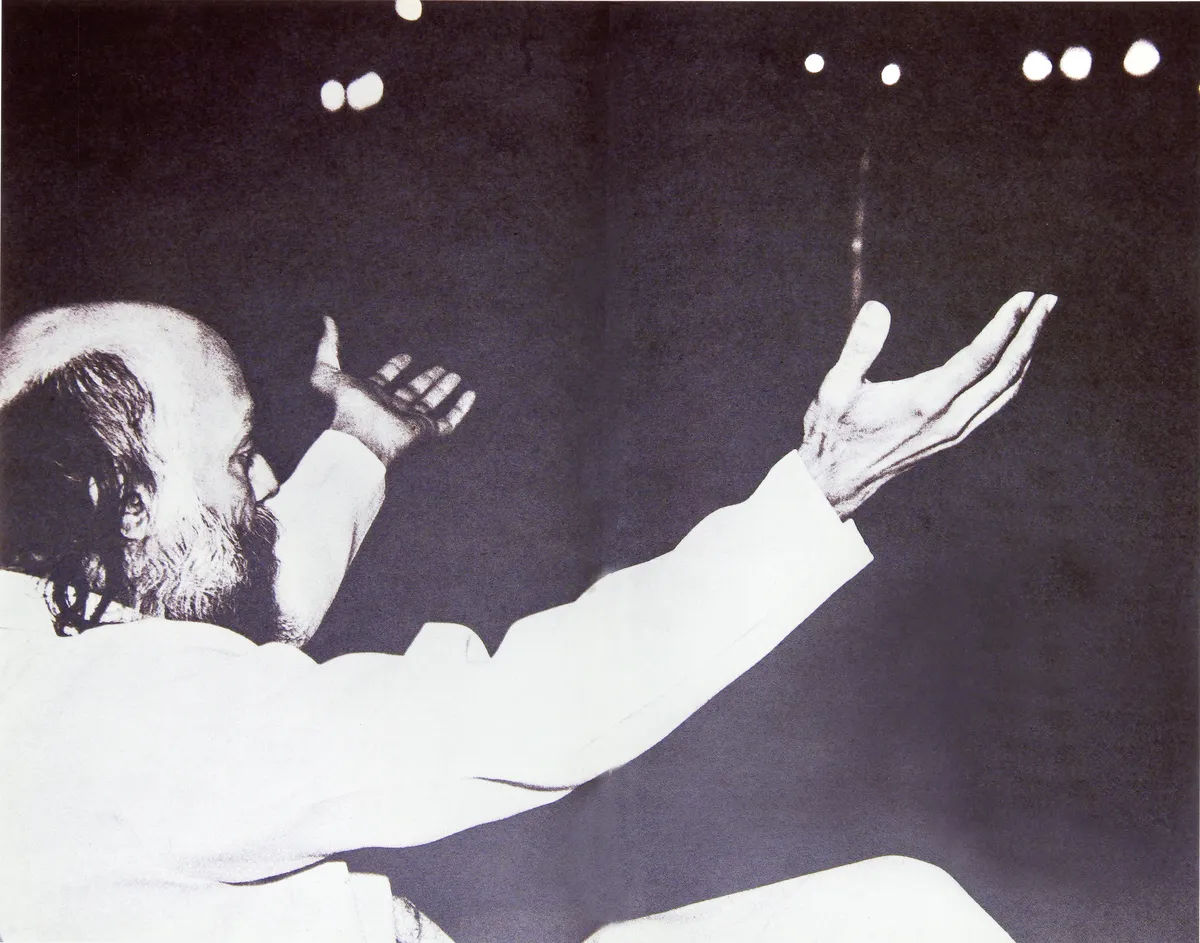
"The Way of Tao, Volume 2" delves into the mystical and transformative wisdom of Taoism as interpreted through the profound insights of Osho. In this series, Osho explores the Taoist philosophy that celebrates living in harmony with the natural flow of life, emphasizing spontaneity, simplicity, and the subtle art of balance. Osho highlights the Tao's emphasis on non-action ('wu wei')—encouraging an effortless alignment with the universe, wherein striving and resistance are replaced by acceptance and peace. Osho’s discourses illuminate the paradoxes of Taoism, where concepts like strength and flexibility are shown not as opposites but complements within the Taoist worldview. He illustrates the beauty of surrendering to one's inner nature and how such surrender leads to a profound understanding of oneself and the cosmos. Osho’s unique perspective is woven through with humor, stories, and incisive commentaries, making these deep spiritual truths accessible and relevant. Through "The Way of Tao, Volume 2," Osho not only explicates the ancient teachings of Lao Tzu but also revitalizes them for modern seekers, offering a path to inner serenity and a profound connection to the world around us.
-
Chapter 1: The dangers of success, the agony of the ego, and the gate of heaven
Success breeds ownership, arrogance and inner slavery; stop before completion, avoid repeating pleasures, withdraw into obscurity to dissolve the ego.
-
Chapter 2: The oneness of the body and the soul, the eternal state of Tao, and the sadhana of the vital breath
Restore oneness by shifting breath to the navel: accept body and desires, exhale fully and become childlike—unity of body, soul and the universe.
-
Chapter 3: An aimless life, an inviting attitude and a pliable understanding
Life's aim is life itself: live moment-to-moment without ambition, invite existence like a female bird, and let wisdom appear as innocent ignorance.
-
Chapter 4: Tao's unpresent presence
Tao is the unclaiming source: present yet absent, creating without control; true God is experienced as invisible love and absolute freedom, not proved by miracles.
-
Chapter 5: Non-existence and emptiness is the support of everything
Emptiness underlies all usefulness: opposites sustain each other—Lao Tzu’s hub, pot and house show how non-existence is the source of life’s support.
-
Chapter 6: Not the hunger of the senses be concerned with the hunger of the spirit
Sensory indulgence dulls perception; conserve energy and withdraw consciousness to the navel so inner senses awaken, tasting the nectar of true being.
-
Chapter 7: The sadhana of Tao -- in the context of yoga
Tao and Yoga are complementary paths: either return to the navel (inaction) or raise energy upward (action); find your centre, remember it, surrender.
-
Chapter 8: Two sides of the same coin: honour and dishonour, greed and fear
Ego-made honour breeds its opposite: praise and disgrace, greed and fear are two sides of one coin; see the opposite and desire falls away freely.
-
Chapter 9: Only he is fit to be the master whose ego is naught
True freedom comes when the ego dissolves: desire ends, fear and rebirth cease, honour and dishonour lose grip—only then can one govern without corruption.
-
Chapter 10: The invisible, inaudible and intangible Tao
Tao is invisible, inaudible, intangible; ultimate truth cannot be grasped by senses or intellect—only when the ego dissolves does the formless appear.
-
Chapter 11: The image of the eternal and the formless, the ancient and the void
Beginningless existence is formless yet manifests as changing forms; meet it in love and dwell in the eternal now—undefinable beyond birth, death or time.
-
Chapter 12: The signs of a saint: he is alert and irresolute, egoless and playful
Saints are inwardly alert, irresolute, self-effacing and playful; true holiness is inner wakefulness, not fixed conduct, as Lao Tzu vividly portrays.
-
Chapter 13: From repose to equality. to attain liberation through the golden mean
Who can repose in a muddy world? Accept inner emptiness, lie still and let thoughts settle; wholehearted activity yields true rest and the golden mean.
-
Chapter 14: The impartial awaiting, the death of pride and the one in the many
Stand aside from the mind - await patiently but sit on the bank; witness thoughts, dissolve ego and 'am-ness' to find timeless calm and oneness.
-
Chapter 15: Inaction, destiny and going back to the eternal law
Discover inner passivity: shift attention from transient clouds of desire to the sky of the atman; return to your root, find the eternal law and destiny.
-
Chapter 16: The door of Tao -- forbearance and non-prejudice
Knowing the eternal law - the hidden anti-world that balances change - gives tolerance, impartiality and kingliness by anchoring the witnessing self.
-
Chapter 17: Who is the best ruler? -- he who is like god
True rulership is egoless inaction: the best ruler is unseen, whose emptiness lets life flow; when the work is done people feel they have achieved it themselves.
-
Chapter 18: The birth of doctrines from the decline of Tao
When the Great Tao declines, doctrines, knowledge and laws arise, creating opposites; true harmony is the natural, non-dual state beyond praise and control.
-
Chapter 19: To live in artless spontaneity and not in doctrines and decorum
Discard doctrines, knowledge and utility; uncover the simple, artless self, love persons not abstractions—true being dissolves justice, cunning and theft.
-
Chapter 20: The renunciation of spiritual desires the revelation of the simple self
Reject outer props-knowledge, morality, utility-and reveal the simple self by turning senses inward, dropping preconceptions, desires; find an inner anchor.
-
Chapter 21: Religion is to be your own self
Stopping the race of desires—worldly or spiritual—is true liberation: non-doing, ordinary being, and removing coverings to discover the self.